

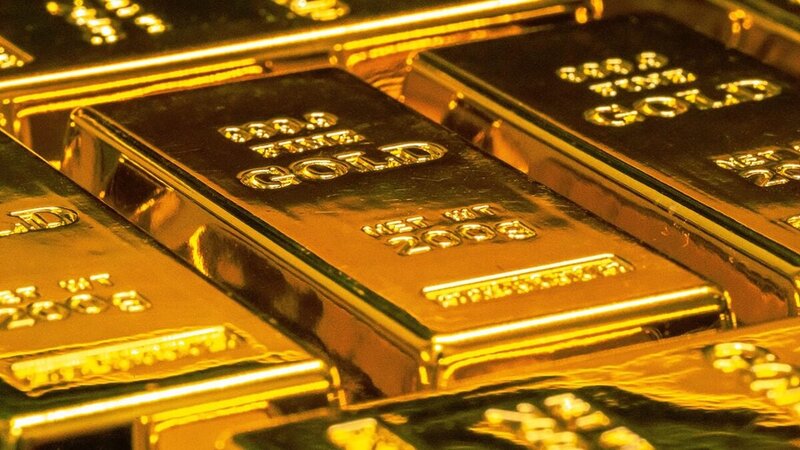
Gold just failed the test it is supposed to pass. A widening war, a 12% weekly jump in crude and disrupted shipping through the Strait of Hormuz would normally send the metal higher. Instead it posted its worst week in six.
August gold futures settled at $4,018.80 on Friday, July 17, capping a weekly decline of roughly 3% — the largest since June 1. Spot gold managed a 1.1% bounce on the session to $4,015.09, but the damage was done earlier in the week.
The move matters beyond the metals desk. It is a signal about what the market now fears most, and inflation has displaced geopolitics at the top of that list.
Why war pushed gold down instead of up
The mechanism runs through interest rates, not through fear.
Crude prices climbed sharply as the U.S.-Iran conflict escalated. Brent crude futures advanced about 4.6% on Friday alone to close at $88.10 a barrel, and U.S. West Texas Intermediate gained about 4.5% to settle at $82.49. Both benchmarks finished the week up roughly 12%. Confirmed crude transit through the Strait of Hormuz fell 62% to 4.1 million barrels a day, according to tanker-tracking data cited by Bloomberg.
An oil shock of that size feeds directly into headline inflation. And higher inflation, in the current environment, does not mean rate cuts — it means the opposite. That is the problem for gold.
Gold pays no coupon and no dividend. Its appeal rises when real yields fall and falls when they rise, because the opportunity cost of holding a non-yielding asset climbs alongside the return available on cash and Treasurys. This is the inverse link between inflation, interest rates and asset prices that drives most of gold’s medium-term behavior — far more reliably than headlines about conflict do.
So the war delivered two opposing impulses. The safe-haven bid pushed gold up. The rate-expectation channel pushed it down harder.
The Fed is the variable that decides
The Federal Open Market Committee left its target range for the federal funds rate unchanged at 3.50% to 3.75% at its June 16-17 meeting, in a 12-0 vote. The interest rate paid on reserve balances stayed at 3.65%, effective June 18.
The tone of that meeting is what markets are trading now. Participants “generally noted that inflation had increased further and remained well above the Committee’s 2 percent longer-run objective,” according to the minutes published by the Federal Reserve. That language was written before crude added 12% in a week.
The next decision lands July 28-29. Market-implied odds of a rate hike — not a cut — rose over the past week, according to CNBC, though pricing has swung widely and most futures-based measures still point to no change as the base case. Traders should treat any single probability figure with caution here; the readings have moved several times in July.
For gold, the direction of that repricing is what counts. A Fed that is talking about tightening rather than easing removes the main support the metal enjoyed through 2025.
The bigger picture: gold is far off its record
Context is worth keeping in view. Gold hit an all-time high of $5,589.38 an ounce on January 28, 2026, during an earlier phase of U.S.-Iran tension and a weaker dollar. Friday’s settlement leaves the metal roughly 28% below that peak.
That drawdown is a reminder that gold’s reputation as a one-way hedge is not supported by its record. It has historically worked as a long-run store of purchasing power, but over horizons of months it can and does fall during inflationary episodes — precisely when many buyers expect it to protect them. Investors weighing an allocation now should look honestly at whether gold still functions as a safe haven rather than assume the label holds in every regime.
The dollar, meanwhile, was not the culprit this time. The U.S. Dollar Index closed at about 100.76 on July 17, essentially flat on the session and below its June 24 high near 101.80. Gold’s decline was driven by rate expectations, not by a currency squeeze.
What to watch for the open
- Crude first. Brent above $88 keeps the inflation channel live. A pullback toward $80 would ease pressure on gold and on rate expectations at the same time.
- Hormuz transit volumes. The 62% drop in confirmed flows is the hard number behind the oil move. Any restoration of traffic is the fastest bearish catalyst for crude.
- Fed communication into the blackout. The pre-meeting quiet period limits speeches ahead of July 28-29, so the June minutes and incoming inflation data carry more weight than usual.
- Real yields, not nominal. Gold tracks inflation-adjusted Treasury yields. Rising nominal yields with rising breakevens are neutral for the metal; rising real yields are not.
- Positioning. Institutional profit-taking after a 3% weekly drop can extend a move well past the fundamental trigger.
For investors who want the exposure without holding metal, exchange-traded commodities offer a low-cost route into gold, though the same rate sensitivity applies to the wrapper as to the bullion.
The trade to watch this week is not gold versus war. It is gold versus the Fed — and last week the Fed won.