The precious-metals rally, which gained momentum at the start of this year with the outbreak of conflict between the US and Iran, has given way to a reset of the market. Nonetheless, the correction may say more about monetary expectations and positioning than about the long-term case for hard assets. Assessing the cooling of prices will be just as important as the rally in prices earlier in the year.
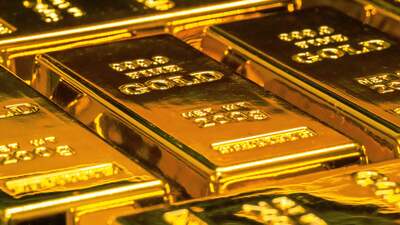
Gold
The second quarter of 2026 was gold’s worst in over a decade. Bullion suffered its worst quarter in 13 years, down from its peak in January of this year. Losing 16 per cent of its value in the second three months of this year, the quarter was the worst for the yellow metal since the second quarter of 2013.
Commodity analysts have reaffirmed that the fall in gold prices can be explained by a series of factors, including stronger-than-expected U.S. economic data, higher real yields, a firmer dollar and a less dovish market view on the Federal Reserve’s rates path.
As geopolitical tensions escalated earlier this year, many central banks, especially in developing countries, chose to increase their gold purchases, given the concerns over the dollar’s long-term stability, driving up the prices. While this has also abated, the most recent World Gold Council survey suggests that central banks will continue to prefer gold in the next year over investing in currency.
However, with this correction in prices, the market may be repricing how much support gold deserves from macro conditions. The key question is whether gold’s pullback reflects a temporary correction in positioning or a more durable shift in expectations, with gold being the best indicator both in the case of fear of investment, as well as for changes in monetary policy.
Gold remains the clearest gauge of monetary expectations, but it is no longer sufficient on its own.
Silver
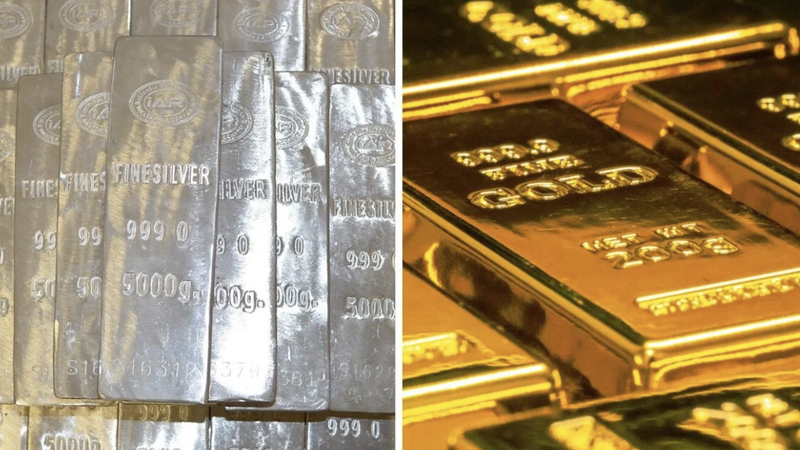
Silver too has pulled back from earlier-year highs, with prices currently around $55 after peaks earlier in the year that had reached over $120. Silver occupies a unique position between gold and industrial metals. Unlike gold, whose price is driven primarily by monetary expectations, silver also responds to manufacturing activity, electronics demand, investment flows and occupies a particularly important position in certain clean-energy technologies. That makes it a useful barometer of whether optimism about economic growth is beginning to outweigh defensive positioning.
For this reason, analysts point to silver being pulled in two directions simultaneously. Experts, however, point to a likely continued growth in silver prices, considering this although more gradually, as the instability and geopolitical risk premium wears off in time. Silver prices, experts generally agree, are more useful than gold for judging whether the correction is mainly defensive or whether it reflects broader weakness in growth expectations.
Silver reveals whether industrial demand is reinforcing, or challenging, the message from gold.
Platinum
In the case of platinum, there are yet other conditions that influence its price. Platinum, widely seen as the industrial precious metal, is both a store of value as well as a key industrial input. Therefore, it is most volatile to changes in the industrial landscape. Additionally, platinum’s market is influenced by the limited availability of the precious metal, with Johnson Matthey forecasting a fourth consecutive annual supply deficit. Their analysis points to the fact that supply will contract in particular from Russia and from South Africa.
Platinum should be considered less as a safe-haven asset and more as a supply-constrained industrial indicator. If platinum remains weak, it implies that industrial demand is not yet strong enough to offset macro caution, if it strengthens, that will point to a tighter supply-demand balance and possibly a broader reallocation toward undervalued hard assets.
Platinum shows whether manufacturing and supply constraints are reshaping the broader commodities cycle.
Macro read-through
Taken together, gold, silver and platinum suggest a market transitioning from geopolitical risk towards a more balanced assessment of global growth. Gold’s correction reflects easing safe-haven demand and shifting expectations for monetary policy, while silver’s resilience will be a key test of whether industrial demand remains robust. Platinum, meanwhile, continues to reflect the tension between constrained supply and still-cautious manufacturing activity.
Rather than pointing to a single narrative, the three metals together suggest that investors are becoming more selective, distinguishing between monetary, industrial and supply-driven forces. Watching the precious-metals complex as a whole therefore provides a clearer macroeconomic signal than following gold alone. Investors who focus solely on gold risk missing the broader signals emerging from silver and platinum.