Wall Street opens Wednesday in a holding pattern. Traders are pinned between a rebounding gold price, a firming dollar, and a Federal Reserve decision just hours away that could end a three-year pause in rate hikes.
Gold Snaps Back, Dollar Firms
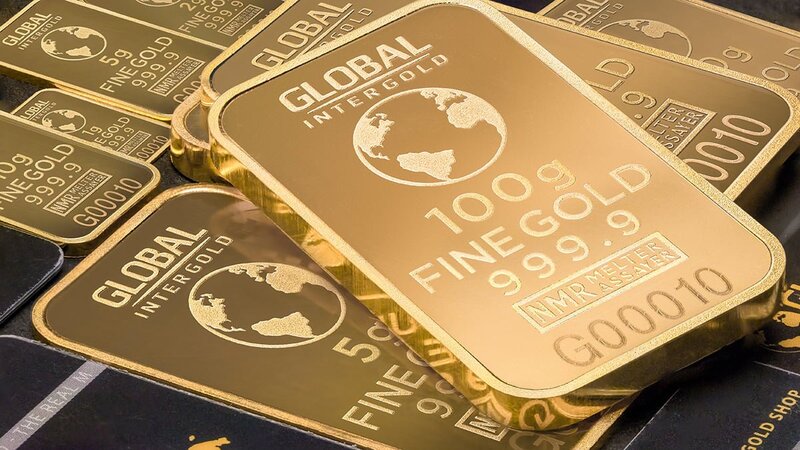
Gold climbed back above $4,300 an ounce Wednesday, ending a two-session decline that had pulled the metal down to roughly $4,263 on Tuesday, its lowest mark in six weeks. The bounce came even as the U.S. Dollar Index rose to 99.57, its highest level since September 3, a combination that would normally pull in opposite directions.
The tension makes sense once the driver is separated from the usual playbook. Gold is not rallying on rate-cut hopes this time — it is being bid up as a hedge against energy-driven inflation, the same force pushing the dollar higher through safe-haven demand. As an evergreen look at gold’s decade-long track record notes, the metal has a long history of holding its value precisely when interest-rate policy and currency markets are pulling in different directions at once.
Futures Inch Higher, but Oil Keeps Investors on Edge
Dow futures were up 0.1%, S&P 500 futures rose 0.2%, and Nasdaq-100 futures gained 0.4% in premarket trading, a modest advance that suggests investors have already priced in this afternoon’s decision rather than waiting to react to it.
Oil is the wild card. Brent crude was trading near $108 a barrel and West Texas Intermediate around $105 Wednesday morning, after WTI jumped 4.4% on Tuesday to its highest level since May. The move follows a drone strike that damaged Saudi Arabia’s East-West pipeline and forced Saudi Aramco to suspend loadings from its Yanbu terminal, adding to disruptions already rippling out from the wider Gulf conflict — the same chokepoint dynamics laid out in a breakdown of why the Strait of Hormuz matters so much to global energy flows. Production problems in Libya have added a second layer of pressure on supply.
Asian markets closed mixed overnight ahead of the decision: Japan’s Nikkei 225 slipped 0.07% to 63,415.20, South Korea’s Kospi edged up 0.10% to 6,634.09, while Hong Kong’s Hang Seng fell 1% on Tuesday, its lowest close since July.
What the Fed Decides Today
The Federal Open Market Committee announces its rate decision at 2 p.m. ET, with a press conference from Fed Chair Kevin Warsh following half an hour later. According to the CME FedWatch Tool, futures markets are pricing in roughly a 92% probability of a quarter-point increase, which would take the federal funds rate from 3.50%-3.75% to 3.75%-4.00% — the first hike since July 2023.
The case for moving rests on inflation that has stayed uncomfortably sticky: August’s Consumer Price Index rose 3.4% year-over-year, well above the Fed’s target and a figure that fits squarely into the kind of persistent, above-target inflation explained in Money.it’s guide to how inflation is measured and what drives it. Warsh signaled as much at Jackson Hole in August, when he said responsibility for months of elevated inflation “falls squarely on the central bank” and that policymakers needed to be confident inflation is moving toward target “clearly and at a sufficient pace.” Since then, the run-up to his first Jackson Hole address as chair had already flagged how closely his tone would be read for clues on the path ahead, and today’s vote is the first real test of that signal.
Markets will also be watching the Fed’s updated quarterly projections, known as the dot plot, for hints on whether today’s move is a one-off or the start of a new tightening phase running into 2027.
What to Watch for the Open
- Retail sales: The Census Bureau releases August retail sales data at 8:30 a.m. ET, the last major data point before the Fed speaks.
- 2 p.m. ET: FOMC rate decision, expected to be a 25-basis-point hike to 3.75%-4.00%.
- 2:30 p.m. ET: Chair Warsh’s press conference — watch for language on the pace of any further hikes.
- Dollar and gold: A hawkish tone tends to lift the dollar and pressure gold; a cautious one could reverse both moves fast.
- Oil supply: Any update on Saudi Arabia’s Yanbu terminal or the East-West pipeline could move energy stocks independently of the rate decision.