

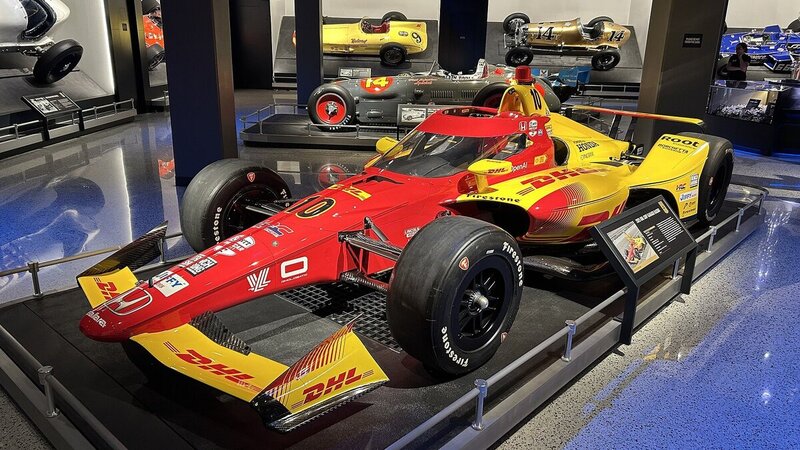
The Indianapolis 500 is no longer just the most prestigious race in American motorsport. It is also the richest single day in IndyCar’s calendar, and the gap between the Brickyard and almost every other open-wheel event keeps getting wider.
This Sunday, May 24, 2026, the 110th running of the race will see 33 drivers chase the Borg-Warner Trophy — and a winner’s check that, based on last year’s record, should land somewhere around $3.8 million. Defending champion Alex Palou starts from the pole after a rain-compressed qualifying weekend, becoming the first reigning winner to lead the field to the green flag since 2010.
Here is what we know about the money on the line, who gets paid what, and why the Indy 500 purse keeps breaking records four years in a row.
How big is the 2026 Indy 500 purse?
IndyCar and the Indianapolis Motor Speedway have not yet released the official 2026 purse, which is typically announced at the public drivers’ meeting on the Saturday before the race. The 2025 edition set the bar at $20,283,000, the largest single-race payout in the 100-plus year history of the event and the fourth consecutive record-breaking purse.
In its 2025 announcement, IndyCar called it «the largest purse in the century-plus history of “The Greatest Spectacle in Racing”». With Fox Sports in its second year as the U.S. broadcast partner and ticket demand for the 110th running running strong, another small bump in 2026 is the working assumption inside the paddock.
For comparison, the 2025 purse was about double what the race paid out in 2021, when Hélio Castroneves won his fourth Indy 500. The growth has been driven by a mix of new sponsorship deals, expanded prime-time TV coverage, and a Penske-led push to close the gap with NASCAR’s Daytona 500 purse.
How much does the winner actually get?
In 2025, Alex Palou took home $3,833,500 — the largest single payout ever awarded to an Indy 500 winner. That is the headline figure most fans see, but it is built from several layers: the base winner’s share, lap-leader bonuses, qualifying bonuses for the front row, and contingency awards from series sponsors.
If the 2026 purse holds at or above last year’s level, the winner’s check should once again sit in the $3.8 million to $4 million range. Palou, who has won three of IndyCar’s first six races this season and starts from the pole on Sunday, is currently the favorite to claim it.
For context, Palou’s 2025 prize alone was more than the entire annual base salary of several mid-grid Formula 1 drivers. We covered the full grid in our breakdown of F1 salaries for the 2025 World Championship, and the Indy 500 winner’s one-day check beats most of them outright.
How is the rest of the money split?
The Indy 500 pays every starter, not just the podium. In 2025, the breakdown looked like this:
- 1st (Alex Palou) — $3,833,500
- 3rd (Pato O’Ward) — $951,000, after a post-race penalty promoted him from fourth
- 4th (Felix Rosenqvist) — $769,500
- 5th (Santino Ferrucci) — more than $700,000
- Last place (Marco Andretti and Kyle Larson, tied) — $102,000 each
The runner-up payout is usually around the $1 million mark, though in 2025 the second-place check became one of the most painful footnotes in recent Indy 500 history. Marcus Ericsson crossed the line second but was bumped to 31st in post-race inspection for unapproved modifications, costing him an estimated $400,000 in lost purse money, according to ESPN’s race-week reporting.
Even the slowest car in the field walks away with a six-figure check — a structure that, combined with the contingency awards, makes the Indy 500 one of the few races in the world where finishing 33rd is still financially worth the month of May.
How does it compare to other major sports events?
The Indy 500 winner’s share is larger than the singles champion’s check at most Grand Slam tennis tournaments. At the 2026 Miami Open, for example, the men’s and women’s singles champions each took home roughly $1.15 million — less than a third of what Palou pocketed last May.
Where the Indy 500 still lags is against NASCAR’s Daytona 500, whose total purse has historically been larger, and the Champions League final, where UEFA’s winner-take-all bonus structure can deliver more than $25 million to the lifting club. But on a per-athlete basis, the Indy 500 winner’s check is one of the largest single-day paydays in global sport.
What to watch for on Sunday
Three things will decide who collects the biggest check on May 24:
- The front row: Palou (232.248 mph average), Alexander Rossi (231.990 mph) and David Malukas (231.877 mph). Palou is the first defending champion on pole since 2010.
- The strategy windows: fuel saving and yellow-flag timing have decided five of the last seven Indy 500s.
- The weather: rain compressed qualifying. A wet race-day forecast would mix the running order — and the payouts.
The official purse breakdown will be confirmed at the post-race press conference on Sunday evening. Until then, we are watching for one number above all: whether IndyCar manages to break its own record for the fifth straight year, and pushes the total past $20.5 million.
Sources: IndyCar — Indianapolis 500 Purse Reaches New Pinnacle (May 2025); Indianapolis Motor Speedway — Winner Purses historical stats; ESPN — Indy 500 runner-up Marcus Ericsson penalized to 31st (May 2025); RACER — Palou takes Indy 500 pole in rain-compressed qualifying (May 17, 2026).