

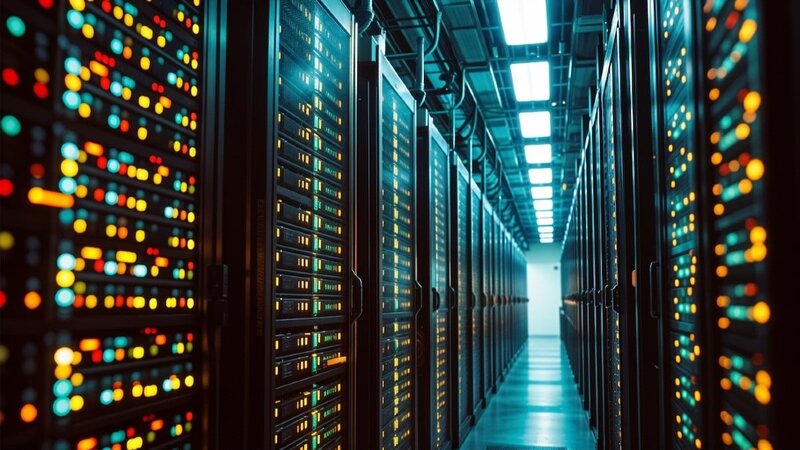
Data centers remain a contested subject. On one hand, they are indispensable for running artificial intelligence on a global scale; on the other, they drive enormous energy consumption with a direct impact on the environment. That tension is precisely why, alongside regulatory measures, the industry is searching for more sustainable alternatives.
Microsoft appears determined to head in that direction. In recent days it signed a $7 billion deal to build a data center campus in Pecos, Texas. The new facility, named Project Kilby, will have a capacity of 2 gigawatts and will be one of the largest capacity expansions in the company’s history.
How the campus will be powered
To power the future campus, Microsoft has already struck a 20-year agreement with Chevron for the supply of natural gas drawn from the Permian Basin, the largest oil field in the United States. The company founded by Bill Gates is trying to soften the criticism it has faced over the heavy use of natural resources to fuel the development of artificial intelligence.
How? By promising to build its own power system for the new data center, fully independent from the public electricity grid. That is what makes the Chevron deal so significant: there will be an on-site electricity generation hub fed by seven GE Vernova turbines.
There is more. Microsoft has committed to a closed-loop cooling system that will require only an initial charge of water to operate. According to the company, the water consumed over this data center’s entire life cycle will be far lower than the annual water use of a single fast-food restaurant.
When Microsoft’s data center will go live
Construction of the new data center is expected to begin shortly, with the goal of bringing power online by late 2027 or early 2028. A project of this scale will generate more than 6,000 construction jobs at peak activity, plus several hundred additional roles for operations once the facility is complete.
What remains unclear is how much water the natural gas plant itself will consume, since the company’s press release does not address it. Critics have also raised another doubt: Microsoft has pledged to reach carbon neutrality by 2030. How will it get there given the 20-year agreement it has just signed for the use of fossil fuels with Chevron?
Editor’s note
This article was originally published in Italian on money.it by Pasquale Conte on June 23, 2026 as «Microsoft firma un accordo da $7 miliardi per la costruzione di un data center sostenibile». It has been translated and adapted for an international audience by the Money.it International desk.