
Microsoft has announced plans to build a large data center dedicated to artificial intelligence (AI) in Pecos, Texas, as part of an internal project dubbed Project Kilby.
The facility will have a capacity of roughly 2 gigawatts and will be powered by natural gas under a long-term agreement with Chevron, which will build the power plant directly on site to serve the infrastructure.
What is making headlines is, above all, the environmental claim from the Redmond tech giant. According to the company, over its entire life cycle the data center will consume an amount of water equal to only a fraction of what a typical fast-food restaurant uses in a single year. Yet one decisive piece is left out of that count: the amount of water needed by the gas plant that will power the entire site.
The Microsoft-Chevron deal and the Pecos data center
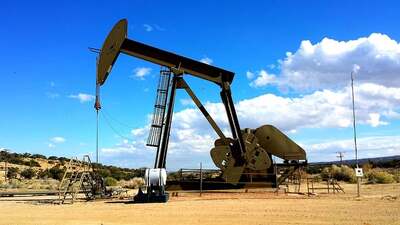
The project stems from a 20-year agreement to supply gas extracted from the Permian Basin, the largest oil field in the United States. The plant serving the complex will be built directly by the oil company and will run on at least seven GE Vernova turbines, for a gas-fired capacity of 2.5 gigawatts that could rise to as much as 5 gigawatts. Chevron’s investment is around $7 billion, one of the largest sums ever committed in the United States to a single energy project tied to infrastructure of this kind.
The company founded by Bill Gates, for its part, has not disclosed how much it intends to invest. The first power supplies are expected between late 2027 and early 2028. The facility represents one of the most substantial capacity additions in the company’s history, while the partnership with Chevron is already being described as the broadest ever signed between a Big Tech firm and a US oil major.
At peak construction, more than 6,000 jobs are expected, joined by hundreds of operational roles once the site is up and running. «The rapid growth we are seeing in AI and the cloud, driven by customer demand, requires an energy infrastructure that can scale quickly and reliably», said Noelle Walsh, president of cloud operations and innovation at the group.
The water promise and closed-loop cooling
The comparison with a fast-food restaurant rests on a closed-loop cooling system. According to Microsoft, this setup will require only a single initial fill and will not need any further water top-ups during normal operation.
The difference from traditional data centers is stark, because the latter can end up consuming millions of liters a year just to dissipate the heat from processors that run almost nonstop. On this front, the company is trying to set itself apart from the accusations that regularly target large tech firms over their use of natural resources to support artificial intelligence.
AI’s water problem
The picture nonetheless remains incomplete. The water consumption of the gas plant that powers the data center has not been disclosed by Microsoft and is not part of the life-cycle calculation for the structure. So the figure applies only to the data bank itself, not to the system that keeps it running.
Also missing is any explanation of how a 20-year gas contract squares with the company’s goal of becoming “carbon negative” by 2030. On the energy front, Microsoft has chosen a dedicated source that is independent of the public power grid, one that lets it avoid competing with local consumers and aims to deflect criticism over its use of resources.
The case fits into an already tense backdrop. A United Nations report estimates that AI data centers will come to absorb an amount of water comparable to the needs of 1.3 billion people. The same document warns that the shift to alternative energy sources cuts CO2 emissions but at the same time risks multiplying the use of water and land along the energy supply chain. For Pecos, the real water bill can only be assessed once Microsoft or Chevron also make public the numbers for the gas plant.
Editor’s note
This article was originally published in Italian on money.it by P. F. on June 24, 2026 as «Microsoft acquista gas Chevron per alimentare un data center AI. Consumerà meno di un fast food». It has been translated and adapted for an international audience by the Money.it International desk.