On Friday evening, September 25, after markets closed, Moody’s affirmed Italy’s sovereign credit rating at Baa2 with a stable outlook, the same level reached with the country’s upgrade in November 2025. The review, according to the agency’s statement, “does not signal a rating action nor indicate one is likely in the near term,” but it raised Italy’s 2026 growth forecast to +0.8% of GDP, following growth of +0.9% in the first half of the year. Moody’s confirmed its deficit forecasts of 3% of GDP for 2026 and 2.9% for 2027, with public debt expected to stabilize around 138% of GDP over the two-year period before beginning a gradual decline.
Among the factors cited in support of the rating, Moody’s pointed to a “large, diversified, high-income economy with a strong domestic investor base” capable of absorbing most of the public debt, Italy’s membership in the European Union and the eurozone, and “solid primary surpluses.” Weighing against the rating, the agency cited “Italy’s high public debt, which limits fiscal flexibility.”
Markets reacted cautiously this morning: the BTP-Bund spread (the closely watched gauge of Italy’s borrowing-cost premium over Germany) opened at 92.3 basis points, up from 91 points at Friday’s close, with the 10-year BTP (Buono del Tesoro Poliennale, Italy’s benchmark government bond) yielding 4.55% and the German Bund yielding 3.62%. The comparison with France remains in the background, where the 10-year OAT (the French government bond) yields 4.7% — a level that has for weeks made French debt more expensive than Italy’s despite France’s lower debt-to-GDP ratio.
Moody’s confirmation, even without an upgrade, is good news for BTP holders: it consolidates Italy’s investment-grade rating two notches above junk status and reduces, at least in the near term, the risk of negative surprises in the cost of public debt. But the challenge remains relative rather than absolute: the spread with Germany moves as much on market sentiment as on strict budget arithmetic, as the French case itself demonstrates.
Hormuz: the truce that isn’t
On the geopolitical front, the weekend brought renewed tension over the Strait of Hormuz. On September 22, Iran had offered to reopen the strait within seven days in exchange for an easing of the US naval blockade; on Saturday, September 26, Donald Trump rejected the proposal, calling it “unacceptable” and asserting “total” American control over the passage. On Sunday, September 27, in an interview reported by Axios, the president added:
«I expect more talks with Iran this week. They want a deal, but it’s not the deal I want.»
Tehran has not closed the door to negotiations: Iranian Foreign Minister Abbas Araghchi told NBC he was “ready for negotiations” and was “still waiting for an official response through the mediators.” According to regional sources cited by Axios, indirect talks mediated by Qatar could resume as early as today.
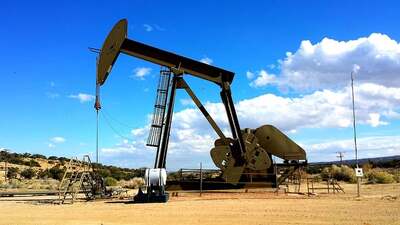
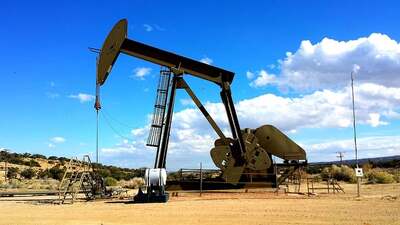
Oil markets reacted with a jump: Brent crude is trading above $106-107 a barrel, up more than 3%, while WTI is climbing toward $94-95.
On the energy front, oil holding firmly above $100 a barrel is adding pressure to imported inflation just as the European Central Bank — with President Christine Lagarde due to testify before the European Parliament this afternoon — weighs the timing of a possible pause in its rate-cutting cycle.
Editor’s note
This article was originally published in Italian on money.it by Ufficio Studi Money.it on September 28, 2026 as «Moody’s promuove l’Italia, il petrolio corre dopo il no di Trump a Hormuz». It has been translated and adapted for an international audience by the Money.it International desk.