
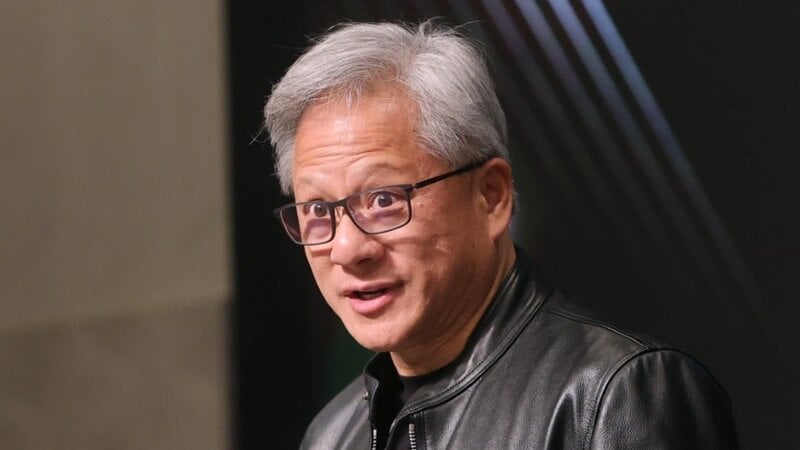
Nvidia’s board reinstated founder Jensen Huang as chief executive on Monday, November 23, twelve days after accepting his resignation. The company said Huang returns as chief executive and rejoins the board, effective immediately. The vote was unanimous.
The board took the decision after a series of meetings with the founder, saying it was satisfied with his ’candor’ and his ’ability to lead the company’. It also consulted senior US government officials, who ruled out that Huang’s return poses any ’risks to national security’.
Wall Street did not wait a minute. The stock opened at $167, more than 30% above the $125.53 close on Friday, November 20, near its 52-week low. In early trading it changed hands at around $162.50, up 29.5%.
In a single session Nvidia recovered roughly $900 billion in market capitalization and pulled the whole market with it. The S&P 500 gained as much as 5% and the Nasdaq 100 as much as 7%, after a volatility halt in pre-market trading.
The damage of the past two months remains. Nvidia closed at a record $239.11 on October 6, a step away from $6 trillion in market capitalization. Even after Monday’s jump the stock is about 32% lower.
Three weeks that burned $2.7 trillion off Nvidia stock
The crisis blew up while AI chips were already under pressure. On October 29 the New York Times revealed a foreign intelligence operation that had allegedly targeted Huang. On November 5, in a session of across-the-board selling in AI names that left the S&P 500 down 4.4%, Nvidia shed 9.3%.
Between November 6 and November 8 came reports of a relationship between Huang and a woman that US intelligence suspects of being a Chinese agent. The founder admitted in a letter to employees that he had had an extramarital relationship. The board renewed its confidence in him and launched an independent investigation.
On November 11 the paper reported a second relationship, with an Nvidia manager who reported to him. That evening the board accepted his resignation, and the official announcement came the next day. Huang left after 33 years, chief financial officer Colette Kress became interim CEO and the stock fell as much as 14%.
On November 15 Treasury secretary Scott Bessent called for an outside CEO and a ’drastic shake-up’ at the top. On November 17, the day of record quarterly results, board chair Harvey Jones said the board did not intend to reinstate Huang. Huang declared himself ready to return that same day.
Then came Friday, November 20. The collapse in AI stocks handed the Nasdaq its worst week since 2020 and Nvidia closed at $125.53, down 23% over five sessions.
From the October record to Friday’s low the stock lost nearly 48%, about $2.7 trillion in market capitalization, and roughly a third since November 6, the last close before Huang admitted the relationship.
Why did the board change its mind?
The statement gives no reasons for the about-face. Pressure to put Huang back in his seat had been building for days.
Large shareholders including Brad Gerstner’s Altimeter Capital and Gavin Baker’s Atreides Management had asked the board to keep ’all options on the table’, the founder’s return among them. A petition gathered more than 190,000 signatures, almost 10,000 of them from Nvidia employees. Donald Trump also came out in favor.
Dan Ives of Wedbush argued that the biggest risk for shareholders was an Nvidia without its founder just as the Rubin product cycle was starting up, with a CEO search that would have dragged on into 2027.
Huang is back, but with a few more guardrails. Harvey C. Jones stays on as board chair. A new National Security and Export Control committee, made up solely of independent directors, will oversee compliance with trade rules with the help of lawyers specialized in national security.
The company is also looking for a new Chief Compliance Officer, who will report to the Nominating and Governance committee rather than to the chief executive. The independent committee’s investigation into the foreign intelligence operation will continue to its conclusion, with Huang’s cooperation.
Nvidia’s numbers were never the problem
While the leadership wobbled, the business kept running. The November 17 quarterly results, the first without Huang, beat expectations across the board.
Nvidia, fiscal third-quarter 2027 results|Figures in billions of dollars, quarter ended October 25, 2026
| Item | Value | Year-over-year change |
|---|---|---|
| Revenue | 115.8 | +103% |
| Data center | 107.6 | +110% |
| Gross margin | 74.8% | +1.4 points |
| Adjusted earnings per share | $2.68 | n/a |
| Fourth-quarter revenue guidance | 130 (±3%) | n/a |
Revenue came in about 6% above a consensus stuck around $109 billion. The fourth-quarter guidance includes one extra week and assumes no revenue at all from data-center chips sold in China.
Shipments of Vera Rubin NVL72, the new computing platform, have begun, and according to Wedbush management raised its growth estimate for fiscal 2028 from 70% to 75%. Demand ’was never in question’, Ives said, because the AI investment cycle fills the order book ’regardless of who delivers the keynote’.
Analyst forecasts, with targets implying as much as +80%
One detail matters a great deal here: nearly every target in circulation was set under a scenario without Huang. After the resignation several banks cut their estimates drastically, and some also downgraded the stock.
| Firm | Rating | Target (dollars) | Upside |
|---|---|---|---|
| Wedbush (Matt Bryson) | Outperform | 293 | +80% |
| Bank of America | Buy | 280 | +72% |
| Morgan Stanley | Overweight | 260 | +60% |
| UBS | Buy | 240 | +48% |
| BMO Capital | Outperform | 240 | +48% |
| JPMorgan | Overweight | 230 | +41% |
| RBC Capital | Outperform | 230 | +41% |
| Wedbush (Dan Ives) | Outperform | 225 | +38% |
| Citi | Buy | 225 | +38% |
| Goldman Sachs | Buy | 220 | +35% |
| Mizuho | Outperform | 220 | +35% |
| Bernstein | Market Perform | 200 | +23% |
| Evercore ISI | In Line | 186 | +14% |
| Truist | Hold | 174 | +7% |
| HSBC | Hold | 170 | +5% |
The heaviest cut came from Evercore ISI. On November 12 Mark Lipacis downgraded the stock and took his target from $465 to $186, a 60% reduction.
Stacy Rasgon of Bernstein halved his price target from $400 to $200, worried above all about the long-term effects of losing a founder so present in day-to-day operations and in customer relationships. Truist went from $346 to $174 and HSBC moved to Hold.
Before the quarterly results Wall Street’s average target was around $268, 65% above Monday’s price. According to S&P Global, of the 61 analysts covering the stock 47 rate it a buy and none a sell, though neutral ratings rose in November to 14, from 2 in October.
After the reinstatement Ives confirmed Outperform and a $225 target. BMO Capital, Outperform with $240, lists the start of Vera Rubin production among the stock’s strengths.
What Jensen Huang is worth, doing the math on the ’founder premium’
Some numbers help answer that. When the resignation became certain Ives cut his target from $300 to $225, effectively attributing $75 per share to Huang alone, a value the same analyst had put at ’roughly $1 trillion’.
On November 23 he chose not to go straight back to $300. That difference, he explains, is Huang’s value once the doubts over governance are cleared up, and for now the independent committee’s investigation, the government inquiries and the export question all remain open.
The founder’s return removes the main reason behind the downgrades from Evercore, Bernstein, HSBC and Truist, which in the coming days may revise their ratings upward. At $162.50 the stock is still below even the $225 Ives indicated for the scenario without Huang, and far from the $300 of the scenario with him.
In mid-November, with the stock at levels similar to Monday’s, Nvidia traded at around 12 times forward earnings, the lowest multiple in 15 years, and according to Wedbush at less than 10 times fiscal 2028 estimates.
The risks that remain open
Monday’s rebound prices in a return to normal that no one can yet guarantee. The internal investigation into the foreign intelligence operation is not closed, and an unfavorable outcome would reopen the crisis.
Outside the company, Nvidia will continue to cooperate with authorities on sensitive matters, including the alleged diversion of chips to China by a Singapore-based customer and the State of California’s investigation into chips sold in China and into the information given to investors. That the board created a committee specifically for exports says how seriously it takes the issue.
The board’s credibility also weighs. In two weeks it confirmed its confidence in Huang, accepted his resignation, ruled out his return and then reinstated him. For large institutional investors the quality of governance feeds into their valuation, and this sequence does not help.
Then there is Washington, with Bessent calling for an outside CEO and Trump rooting for Huang. For a company so exposed to export rules, relations with the White House feed straight into the numbers.
Finally, the fundamentals. Gross margin is expected to fall to 71-72% in the fourth quarter, from 74.8%. Revenue is heavily concentrated, with three customers accounting for 36% of sales. And fears of a slowdown in AI investment are the same ones that sank the Nasdaq on Friday. On none of these points does Huang’s return change anything.
What to do with Nvidia stock
If the investigation closes with no consequences for Huang and those who downgraded go back to recommending the stock, targets can climb back toward pre-crisis levels. The shares would then have room to move toward the $225-260 area indicated by Ives, Citi and Morgan Stanley, between 38% and 60% above current prices.
If instead the internal investigation and the outside inquiries drag on for months, the market will keep applying a governance discount and the stock will stay volatile, though supported by the numbers and the valuation, at least until the next quarterly results at the end of February 2027. New developments on national security or exports, or a worsening of the AI investment crisis, would put Friday’s lows in the $125 area back at center stage.
Most analysts advise those already invested not to sell, because the rebound recovers only part of the losses and the valuation remains among the lowest in years. Those who want to get in should do so gradually. After a 30% gain in a single session, profit-taking is common, and any news from the investigation can move the stock by tens of percentage points in either direction.
| DISCLAIMER The information and considerations contained in this article should not be used as the sole or primary basis for making investment decisions. The reader retains full freedom in his or her own investment choices and full responsibility for making them, since he or she alone knows his or her risk tolerance and time horizon. The information contained in the article is provided for informational purposes only, and its publication does not constitute and is not to be considered an offer or solicitation of public savings. |
Editor’s note
This article was originally published in Italian on money.it by Flavia Provenzani on November 23, 2026 as «Azioni Nvidia in rally, Jensen Huang torna CEO. Cosa dicono gli analisti e quanto può salire ancora il titolo?». It has been translated and adapted for an international audience by the Money.it International desk.