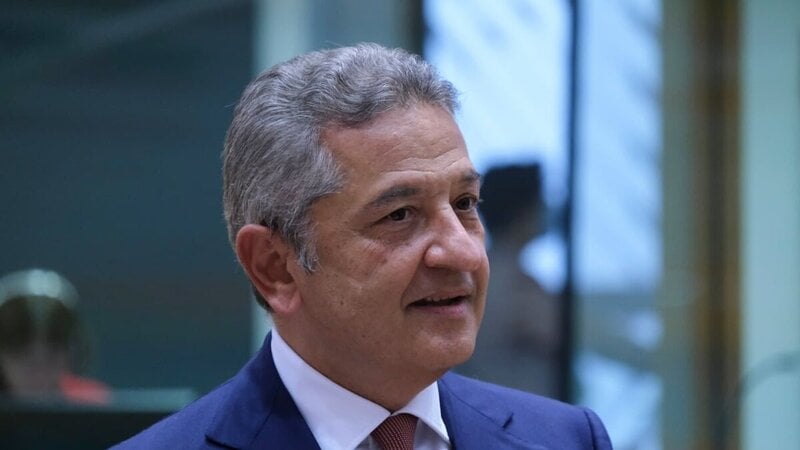
Fabio Panetta, Governor of the Banca d’Italia, Italy’s central bank, said the European Central Bank may need to raise rates again. “With price dynamics set to remain above the target for a long time and risks skewed to the upside, further increases in official rates may become necessary,” he told World Savings Day, hosted by Acri, the association of Italian savings-bank foundations, in Rome on October 30, 2026, a day after the ECB meeting that left rates unchanged.
Panetta sits on the ECB’s Governing Council, so this is no outside commentary. He spoke on the same day that Istat, Italy’s national statistics office, confirmed an acceleration in prices. The preliminary estimate put October inflation on the NIC index (Italy’s national consumer price index) at 5.4% year over year, up from 4.2% in September.
The ECB held, but a hike was on the table
On October 29 the Governing Council left its three key rates unchanged, with the deposit rate at 2.50%. That was a pause after two increases of 25 basis points each, decided on June 11 and September 10.
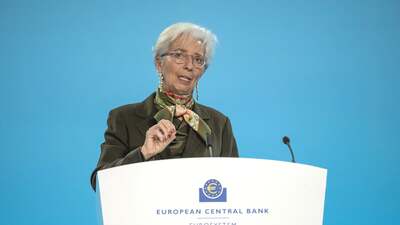
A pause is not calm. At the press conference, Christine Lagarde said the Council had debated raising rates immediately before unanimously choosing to stand pat. It was also the meeting at which the president announced her departure: she will leave the post on February 7, 2027.
From Rome, Panetta repeated that “the Governing Council will continue to take decisions meeting by meeting, on the basis of the data available.” That flexibility cuts both ways: the stance could also shift if the international picture improved or if financial strains slowed the economy. The next test is the meeting on December 16 and 17, when the Council will also have the new macroeconomic projections in front of it, Lagarde said.
The energy shock and the risk of a price-wage spiral
The flare-up starts with energy. Panetta pointed to the closure of the Strait of Hormuz and its effect on fuel and gas prices: in the euro area, “consumer inflation has doubled since February, to 3.8 percent, almost entirely because of the energy component.” That is the September figure published by Eurostat on October 16, with energy up nearly 19% year over year and core inflation still contained at 2.5%.
Italy took a further jolt in October. The harmonized HICP index (the EU-harmonized consumer price index), at 4.2% in September, jumped to 5.6%, driven above all by utility bills: regulated energy prices rose by almost 60% compared with a year earlier. The more delicate signal comes from what is left once energy and fresh food are stripped out. Core inflation climbed from 1.6% to 2%.
That is what worries the Bank of Italy. “Monetary policy cannot prevent the price increases caused directly by the energy shock,” Panetta said, but it must stop those increases from durably shifting the expectations of households and businesses and igniting a spiral between prices and wages. The outlook, in the governor’s words, is “deteriorating”: headline inflation would stay above 2% for many quarters, and the rise in core inflation could become more pronounced in early 2027.
Households with a floating-rate mortgage already feel the squeeze. ECB data series show the monthly average of 3-month Euribor rising from 2.425% in July to 2.635% in October, close to September’s level; over the same period the 12-month rate went from 2.855% to 3.239%. Banks, meanwhile, are tightening their supply of credit.
Yields, debt and the spread: the knot for Italy
Long-term yields are rising too, mainly because of global factors. Panetta said they make financial conditions more restrictive, and that this also has to be weighed in calibrating monetary policy “gradually.” For Rome the issue is anything but theoretical. “Rate increases weigh above all on countries with high public debt,” he said, squeezing the room for maneuver in public budgets just as spending needs grow.
The governor still claimed the payoff from fiscal prudence. The deficit has fallen from 9% of GDP in 2020 to around 3%, several rating agencies have upgraded their assessment of Italy, and that has helped contain the widening of the spread (the yield gap between Italian and German government bonds). In Panetta’s words, “there is still room for more favorable judgments.”
Warsh’s Fed is debating hikes too
The debate is not confined to Frankfurt. On October 28 the Federal Reserve, chaired by Kevin Warsh, kept the fed funds rate in the 3.75-4% range, but the decision passed by 10 votes to 2: Lisa Cook and Beth Hammack would have preferred a 25-basis-point hike right away, a sign of a divided FOMC. Two votes out of twelve may seem few. They are enough to show that in Washington, as in Frankfurt, the discussion about the next move has already begun.
| DISCLAIMER The information and considerations contained in this article should not be used as the sole or primary basis for making investment decisions. The reader retains full freedom in his or her own investment choices and full responsibility for making them, since only the reader knows his or her own risk tolerance and investment time horizon. The information contained in the article is provided for informational purposes only, and its publication does not constitute and should not be considered an offer or solicitation of public savings. |
Editor’s note
This article was originally published in Italian on money.it by Ufficio Studi Money.it on November 02, 2026 as «Panetta apre a nuovi rialzi dei tassi BCE: “Potrebbero rendersi necessari ulteriori aumenti”». It has been translated and adapted for an international audience by the Money.it International desk.