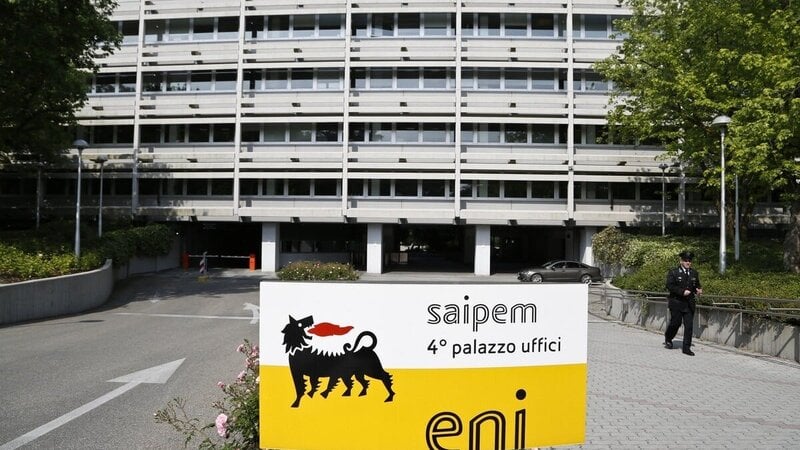
Saipem shares jumped in Milan the morning after the company reported its nine-month results and issued its first guidance for 2027. At 9:42 a.m. the stock traded at EUR 4.271, up 5.93% from the November 18, 2026 close, after touching a high of EUR 4.295 in a busy first hour.
The figures for the first nine months of 2026, along with the first indication for 2027, came out after the close on Wednesday evening, November 18, 2026, at 6:40 p.m. The 2.63% fall that day had nothing to do with the results: it came in a rough session for oil-linked stocks. Chief executive Alessandro Puliti and chief financial officer Paolo Calcagnini present the numbers to analysts on a 10:30 a.m. conference call.
Orders and cash, the numbers the market is rewarding
Orders catch the eye first. Saipem signed new contracts worth EUR 11.1 billion (about $11.99 billion) from January through September, up 47.9% on the same period of 2025. The third quarter alone brought in EUR 5.37 billion ($5.80 billion), a 67.4% increase. The group says it is confident of closing the year with order intake above 2025 levels. The backlog, at EUR 30.65 billion ($33.10 billion), sits just below the EUR 31.47 billion ($33.99 billion) recorded at the end of December.
Operating growth is more modest. Revenue rose 4.3% to EUR 11.46 billion ($12.38 billion), adjusted EBITDA rose 8.6% to EUR 1.30 billion ($1.40 billion), and the margin widened to 11.4% from 10.9% a year earlier. The company stresses that it absorbed the extra costs of the conflict in the Middle East along the way. The press release puts no figure on them.
Then there is the cash, perhaps the most convincing number of all. Before IFRS 16, the group holds net cash of EUR 1.49 billion ($1.61 billion), almost half a billion more than the EUR 999 million ($1.08 billion) at the end of 2025. Including lease liabilities, the position swings from EUR 272 million ($294 million) of net debt to EUR 455 million ($491 million) of net cash, and that is after paying out EUR 330 million ($356 million) in dividends. Part of the boost comes from the sale of the shallow-water drilling business in Saudi Arabia, agreed in June: EUR 258 million ($279 million) of the EUR 792 million ($855 million) of cash generated in the nine months came from there.
2026 guidance confirmed, EBITDA of EUR 2 billion for 2027
The outlook was the most delicate part, and the market found what it wanted. Saipem confirms its 2026 targets: revenue of about EUR 15.5 billion ($16.74 billion), adjusted EBITDA of about EUR 1.75 billion ($1.89 billion), capital expenditure of around EUR 450 million ($486 million) and free cash flow after leases of about EUR 600 million ($648 million), excluding the proceeds of the disposal.
That reads like a non-event until you remember July. With the half-year results the company cut its adjusted EBITDA target to about EUR 1.75 billion from the EUR 1.9 billion ($2.05 billion) indicated in February, citing the costs of the Middle East crisis and the removal of shallow-water drilling from the perimeter. The next day Saipem shares fell by more than 9% at one point. This time there was no new revision.
A budget for 2027 has already been approved, and that is why the board meeting on the accounts was moved in September from October 27 to November 18. The estimates point to revenue of about EUR 16.5 billion ($17.82 billion) and EBITDA of around EUR 2 billion ($2.16 billion), with capital expenditure of EUR 450 million to EUR 500 million ($486 million to $540 million) and cash conversion similar to this year’s. Two details matter. The press release does not say whether the 2027 EBITDA figure is adjusted, as it specifies for 2026, and the estimates assume the extra costs in the Middle East stay at current levels.
Recent days have brought some support for those numbers. On Tuesday, November 17, 2026, ExxonMobil sanctioned the execution of Longtail, offshore Guyana, which for Saipem means a subsea system contract estimated at between $1 billion and $1.5 billion over about four years. On November 18, 2026, the company announced two drilling contracts for the semi-submersible rig Scarabeo 9, worth about $181 million in total, in Egypt and Suriname, with work starting in the first quarter of 2027.
Adjusted net income and Subsea7, the weak points
The income statement has a duller side. Adjusted net income fell 19.5% to EUR 178 million ($192 million), and in the third quarter it dropped 42%, to EUR 47 million ($51 million). Operations are not the reason, since adjusted EBIT is steady at 2025 levels. The difference is EUR 110 million ($119 million) more in taxes. Reported net income, at EUR 210 million ($227 million), holds up better only thanks to the EUR 67 million ($72 million) capital gain on the disposal.
Then there is the merger with Subsea7. Thirteen of the 16 antitrust clearances required have come through, including the Brazilian one on November 4, 2026, which is conditional on the sale of the vessel Seven Borealis. The closing, expected in the second half of 2026 when the merger agreement was signed, is now indicated for early 2027. The synergies are confirmed.
For now, the market is weighing orders and cash more heavily than the delay.
The technical picture
The rebound starts from oversold territory, with the 14-day RSI down to 33 at the November 18 close. In a single morning the stock has climbed back above its 200-day moving average, at EUR 4.19, and pushed past resistance at EUR 4.27, reaching EUR 4.295. The price is still hovering around that threshold, with the session wide open.
Higher up sit the 20-day and 50-day moving averages, at EUR 4.32 and EUR 4.37. Saipem would have to win back that stretch too, and erase the 6.82% it lost over the past week, before anyone could talk about a reversal. Over twelve months the stock was already up 76.53% as of the November 18 close.
| DISCLAIMER The information and considerations contained in this article must not be used as the sole or primary basis for making investment decisions. The reader retains full freedom in their own investment choices and full responsibility for making them, since only the reader knows their own risk tolerance and time horizon. The information contained in this article is provided for informational purposes only, and its publication does not constitute and is not to be considered an offer or solicitation of public savings. |
Editor’s note
This article was originally published in Italian on money.it by Ufficio Studi Money.it on November 19, 2026 as «Saipem sale in Borsa dopo i conti: ordini +48% e prima guidance 2027, ma la fusione con Subsea7 slitta». It has been translated and adapted for an international audience by the Money.it International desk.