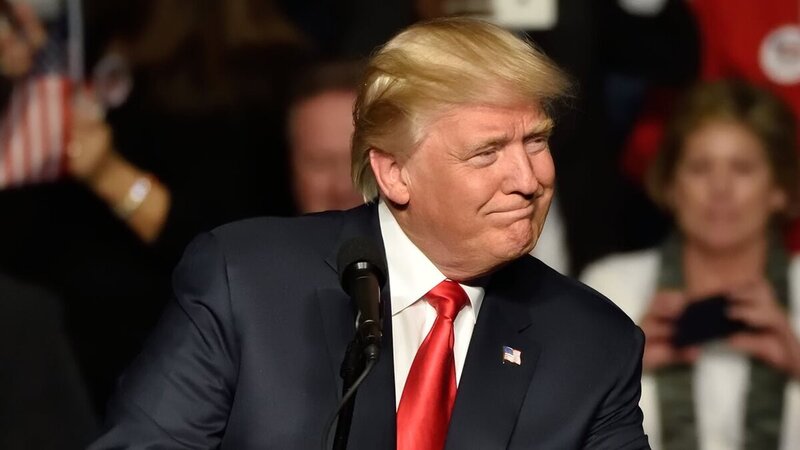
Donald Trump rang the New York Stock Exchange (NYSE) opening bell from the White House to celebrate the first trading day of Trump accounts, a government initiative that hands children a $1,000 investment account.
On Monday morning, July 6, the US president hosted the leadership of the NYSE and the Nasdaq in the Oval Office — the first-ever joint opening of the two exchanges, and the first time the bell has been rung at the White House.
Since July 4 — a date the Trump administration picked to coincide with the celebrations of 250 years of American independence — US families can finally open the so-called «Trump Accounts», the new investment accounts designed for minors. The program provides an initial $1,000 deposit from the federal government for millions of newborns who meet certain requirements.
The initiative was created under the law known as the One Big Beautiful Bill Act. On Monday, Trump touted the scale of the project, claiming that children born without a penny could reach age 18 with a «substantial» nest egg. Not everyone shares the enthusiasm, however: several analysts note that the biggest winners will be families already able to make additional contributions over the years, while those with fewer resources risk being left with nothing beyond the initial bonus.
What are Trump investment accounts?
Also known as 530A accounts, they are tax-advantaged investment vehicles reserved for those under 18. The capital is automatically allocated to index funds tied to the US stock market and grows on a tax-deferred basis.
The stated goal is to let children build savings from their earliest years, so that once they come of age they have capital available for specific purposes such as college, buying a first home, or starting a business. When the beneficiary turns 18, the account converts into an instrument comparable to a traditional IRA, so it can also keep serving as a retirement nest egg.
Who qualifies for the $1,000 bonus?
The government contribution does not go automatically to every minor. To receive it, the child must meet three conditions: be born between January 1, 2025 and December 31, 2028, hold US citizenship, and have a valid taxpayer identification number.
Children who fall outside these parameters can still open a Trump account — they simply will not receive the public deposit. According to statements made Monday by Treasury Secretary Scott Bessent, six million children have already been enrolled in the program, and 86% of them belong to households earning less than $200,000 a year. Notably, the parents’ immigration status is not an obstacle to opening an account, as long as the child meets the requirements.
How does it work?
Once activated, the account automatically invests the capital in low-cost index funds pegged to benchmarks such as the S&P 500; during this initial phase, investments are restricted to instruments with low fees. Day-to-day management of the accounts has been entrusted, for now, to Bank of New York Mellon, and families can monitor balances and returns through the official app or the government portal.
Beyond parents, contributions can also come from guardians, grandparents, older siblings, employers, and other relatives.
How much can you contribute?
Excluding the initial government deposit, the annual cap is $5,000 per child, and within that limit employers can contribute up to a maximum of $2,500 a year. Charities and state or local government entities can also make deposits, which in certain cases do not count toward the annual cap.
Several companies have already announced initiatives to top up children’s savings, including Dell Technologies, Bank of America, JPMorgan Chase, Micron Technology, Nvidia, Intel, IBM, and Uber.
When can the money be withdrawn?
Barring special circumstances, the funds stay locked until the beneficiary turns 18. From that point on, the money can remain invested or be used for specific purposes, such as continuing education, buying a first home, or launching a business.
An early withdrawal for purposes other than those allowed triggers — in line with the rules governing traditional IRAs — the payment of the taxes due plus an additional 10% penalty, except for the exemptions provided by law.
Strengths and weaknesses of the program
The strong point experts cite most often remains the free $1,000 in seed capital, which can grow significantly over time thanks to compound interest. But several financial advisors point out that Trump investment accounts are no substitute for proven tools like 529 education savings plans, which remain more tax-efficient and more flexible on the investment side.
One question raised by economists and think tanks still stands: the program’s real-world effectiveness will depend above all on each family’s ability to keep making contributions over the years. Higher-income households will be better positioned to exploit the accounts’ growth potential, while low-income families risk benefiting from nothing more than the initial government deposit.
Editor’s note
This article was originally published in Italian on money.it by Flavia Provenzani on July 07, 2026 as «Arrivano i conti d’investimento di Trump. Bonus di $1.000 per milioni di bambini». It has been translated and adapted for an international audience by the Money.it International desk.