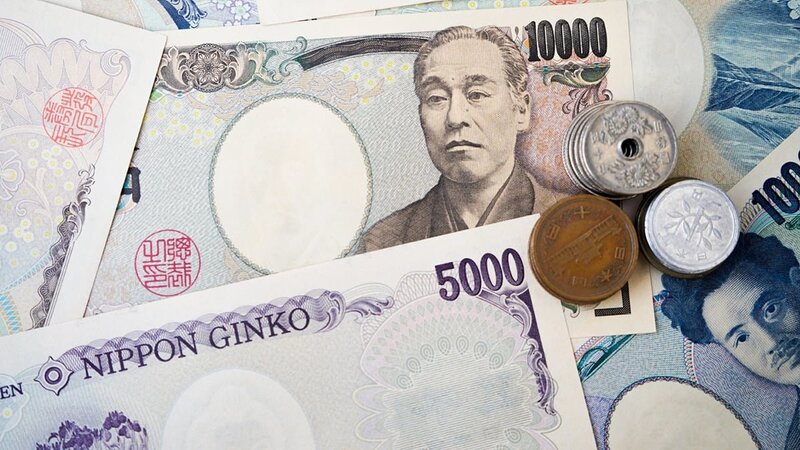
The foreign exchange market has just witnessed a move that reached back almost three decades. The United States and Japan carried out a coordinated joint intervention to prop up the yen — the first operation of its kind since 1998. At the center of the decision was not a traditional Treasury bureaucrat, but Scott Bessent, Treasury Secretary in Donald Trump’s administration and, in a previous life, one of Wall Street’s best-known macro traders, schooled under George Soros.
Bessent brought to the Treasury Department the same instinct that once let him earn a billion dollars betting against currencies. Rather than sticking to the discreet, formal channels typical of monetary diplomacy, he chose to move markets with deliberate signals. During a cabinet meeting at Camp David in late July 2026, he left a notepad in plain view on the table, reading «To Do: Buy Japanese Yen (JPY) $5-10 bil». The photograph, taken over the secretary’s shoulder, circulated quickly and foreshadowed the actual intervention by only a few hours. It was no slip: it was a classic hedge-fund technique — leaking intent to steer expectations before acting.
Selling euros to buy yen
The intervention, coordinated with Tokyo, temporarily reversed months of yen depreciation, after the currency had hit a 40-year low against the dollar. Bessent did not stop at buying yen directly. He reached for tools rarely used by a US Treasury: he sold euros from official reserves to fund the yen purchases — calling it a simple reallocation of resources — and pushed for Japan to use, and possibly expand, the Federal Reserve’s Foreign and International Monetary Authorities (FIMA) Repo Facility. That mechanism, created during the pandemic, lets Japanese authorities obtain dollars by pledging US Treasury securities without selling them on the open market, thereby avoiding upward pressure on US bond yields.
The rationale Bessent laid out in later interviews is explicit and geopolitical. A yen that is too weak risks triggering competitive devaluations across Asia, with knock-on effects on the South Korean won and, potentially, the Chinese yuan. The secretary pointed directly to the lessons of the late-1990s Asian financial crisis, when an excessively weak yen helped destabilize the entire region. Stabilizing Japan’s currency, he repeated, is not merely a favor to an ally but a direct US interest. «We will do whatever is necessary», he said, «in a way that helps the American economy and American taxpayers».
Pressure on Tokyo, dressed up as a rescue
Behind the technical move lies a strategic recalculation of relations with Tokyo. Bessent publicly backed the government of Prime Minister Sanae Takaichi and Finance Minister Satsuki Katayama, while signaling that he expects further steps from the Bank of Japan under governor Kazuo Ueda, whom he has known for fifteen years. The intervention, the secretary argued, must be accompanied by monetary policy and fundamentals that push the yen back toward a more sustainable equilibrium. In that sense the operation is not purely defensive: it becomes a tool of indirect pressure on interest rates and the trade balance, consistent with the Trump administration’s more assertive approach toward trading partners.
What stands out most is the change in style. Bessent’s predecessors at the Treasury tended to move with great caution, wary of being accused of currency manipulation or interference. Bessent, by contrast, treats international monetary policy as a macro trade: he reads the flows, anticipates market reactions, uses communication as leverage, and frames every move within a broader economic statecraft. The yen rescue thus becomes the first textbook case of this new posture — a laboratory in which a trader’s instincts are applied to the management of reserves and alliances.
For now the yen remains under pressure, and Bessent has not ruled out further joint interventions. The message to markets is blunt: the US Treasury Department is no longer merely a passive watchdog, but an actor willing to step onto the field with the same tools and the same mindset once used to break a currency — now deployed to try to save one. The difference, this time, is that the person running the operation sits on the government’s side, and no longer behind a trading screen.
Editor’s note
This article was originally published in Italian on money.it by the Money.it Premium desk on August 05, 2026 as «Trump e Bessent fanno ciò che nessuno faceva da 28 anni sullo yen. Ecco perché gli USA stanno salvando la valuta del Giappone». It has been translated and adapted for an international audience by the Money.it International desk.