

After all the noise, will Friedrich Merz’s Germany finally exit Commerzbank’s capital altogether, selling the 12.7% stake it still owns to UniCredit? That is the picture emerging from a Bloomberg report.
According to the news agency, some senior German officials have signaled a willingness to discuss handing over the stake the Merz government still holds in the country’s second-largest lender to the Italian bank led by chief executive Andrea Orcel — on condition that the two institutions first agree both on a shared strategy and on Commerzbank’s future.
Buying Berlin’s stake would take UniCredit above 60% of Commerzbank
Bloomberg is careful to note that only some officials have shown that openness, and that the Merz government’s official position has not changed.
Even so, while Berlin has been consistent in restating its support for Commerzbank’s independence, German Chancellor Friedrich Merz recently made clear that his government does not intend to move to block UniCredit’s takeover of the bank, following the success of UniCredit’s public exchange offer (an OPAS, the Italian share-and-cash tender structure).
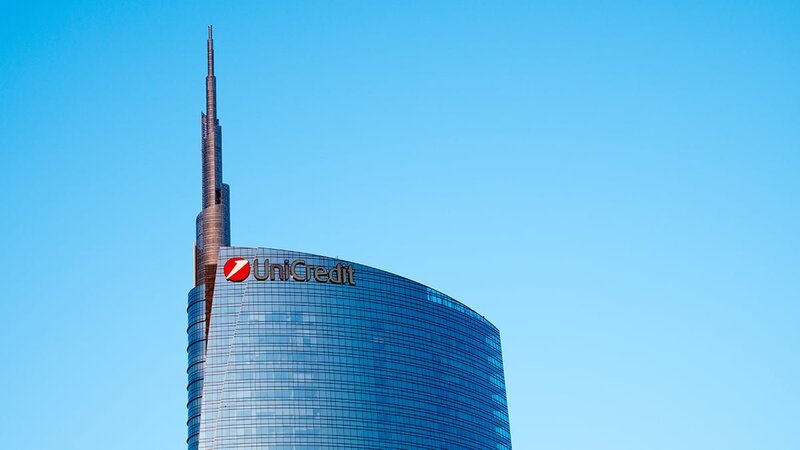
If the reports prove accurate, selling Germany’s Commerzbank holding to UniCredit would allow the Milan-based group — headquartered at Piazza Gae Aulenti — to raise its position from just under 50% today to more than 60%.
A spokesperson for the Merz government contacted by Bloomberg restated the official line and declined to comment on the reports. Commerzbank and UniCredit also declined to comment.
«An important precedent», but not yet a template
Johannes Hesche, portfolio manager at the ACATIS Value Event Fund, recently commented on the UniCredit-Commerzbank file. (HVB, cited below, is HypoVereinsbank, the German lender UniCredit has owned since 2005.)
«I would consider the UniCredit-Commerzbank deal an important precedent, but not yet the reference model for a wave of hostile cross-border banking acquisitions. The ECB has explicitly pushed for greater consolidation in the European banking sector, and if UniCredit were to succeed despite the constant opposition of the German government and Commerzbank’s management, that would show that national politics alone cannot ultimately block a deal that meets European regulatory standards. But this is also an unusually favorable situation: UniCredit already has a substantial presence in Germany through HVB, the competitive overlap is limited, and its 47.59% economic stake translates into almost 50% of Commerzbank’s voting rights, leaving the target company very little room for maneuver.»
The fund manager went on to note that «Orlopp’s decision to accept the offer therefore looks less like a change of heart and more like an acknowledgment that the final outcome had become hard to avoid» — a reference to Commerzbank chief executive Bettina Orlopp.
Hesche added that «if the deal proves financially profitable after integration, it should make it easier to promote friendly cross-border mergers with boards and investors».
He concluded: «I would nevertheless be far more cautious about assuming that other European banks are willing to take the hostile path Orcel has pursued over the past two years».
How the two stocks are trading
Listed on the Ftse Mib in Milan, UniCredit shares were down 0.50% at €84.80 on Monday, August 17, 2026, while Commerzbank stock, traded on the Frankfurt exchange, was posting a slight decline at €39.68.
Why it matters beyond Italy and Germany: the European Central Bank has spent years arguing that the euro area has too many banks and too little cross-border consolidation. A Commerzbank deal completed over the objections of a national government would be the clearest test yet of whether that argument now outranks domestic political resistance.
Editor’s note
This article was originally published in Italian on money.it by Laura Naka Antonelli on August 17, 2026 as «Azioni UniCredit sotto i riflettori. La Germania venderà quota 12,7% in Commerzbank a Orcel?». It has been translated and adapted for an international audience by the Money.it International desk.