

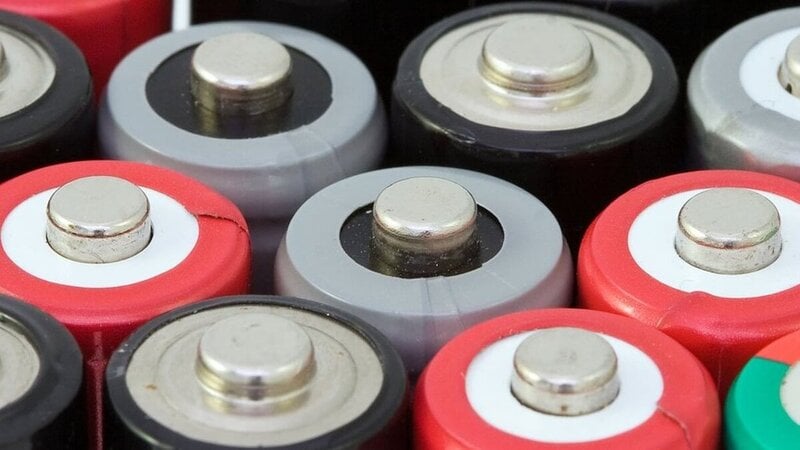
Varta, the historic German battery manufacturer and a brand recognized around the world, has crossed the line it had spent months trying to avoid. On Friday, July 24, the company filed four insolvency petitions with the district court in Stuttgart as part of a self-administration procedure (a German restructuring process, known as italicSchutzschirmverfahren/italic, that lets a company reorganize under court protection while management stays in place). More than 3,260 jobs are at risk, and the group could face a definitive breakup.
Varta’s roots go back to 1887, when entrepreneur Adolf Müller founded a small battery factory called Büsche & Müller in the city of Hagen. Soon after, industrial giants AEG and Siemens invested in the business, which became Accumulatorenfabrik AG (AFA), the company from which today’s Varta would later emerge. Over the following decades the brand became a byword for reliability, supplying batteries for Germany’s first electric cars. The company then moved into accumulators for automotive lighting, before expanding into batteries for flashlights, radios and consumer electronics. By the 1920s, riding the radio boom, it already employed thousands of people and produced roughly 120 million batteries a year.
What pushed Varta into bankruptcy
It is precisely this long and seemingly unassailable history that makes today’s crisis even more telling than the broader difficulties facing German industry. The creditors — led by Deutsche Bank alongside financial investors RBC BlueBay, Blantyre and Whitebox — refused to extend further financing after an independent analysis, carried out by a consulting firm, concluded that Varta needed a short-term cash injection worth tens of millions of euros. Despite weeks of negotiations, none of the parties involved committed to providing fresh funds.
It is worth remembering, though, that this is not the first time Varta has been through a crisis of this kind. Back in 2024 the company launched a major restructuring to avoid bankruptcy. On that occasion shareholders saw their stakes almost entirely wiped out, while creditors gave up roughly half of what they were owed. In April of last year management called the operation a success, arguing that the company was back on the right track. The facts, however, told a very different story.
A heavy blow also came from the loss of one of its most important customers: Apple. The Cupertino giant, which bought rechargeable button cells from Varta for its AirPods, decided to halt its orders. As a result, the Nördlingen plant will close, with the loss of around 350 jobs. Varta will keep producing these batteries for Apple until November, after which production will most likely be moved to China. All told, the restructuring currently underway will involve cutting about 800 jobs.
Today Varta is 50% controlled by Austrian entrepreneur Michael Tojner, through the Montana Tech Components group, while the remaining 50% belongs to carmaker Porsche. Both shareholders decided not to inject new capital, a choice that effectively triggered the insolvency filings.
The plan now taking shape calls for a split of the group. The most profitable arm — household batteries, valued at around 240 million euros (about $259 million) but potentially worth up to 300 million euros (roughly $324 million) in a sale — would be carved out of the insolvency proceedings covering the parent company and its three subsidiaries, to be acquired directly by the creditor group led by Deutsche Bank.
A self-administration procedure has also been opened for Varta Microbattery, the division that makes, among other things, the button cells used in hearing aids. Tojner has already expressed interest in this business, though he considers cost and headcount reductions unavoidable here too.
The Porsche lifeline
In this particularly difficult scenario, the partnership with Porsche is one of the few bright spots. Back in 2025 the German carmaker, together with Tojner, had already acquired a majority stake in the V4Smart high-performance lithium-cell business — which is not part of the current insolvency — used to power Porsche’s electrified sports models, including the 911 Carrera GTS hybrid. At the time the two partners invested a combined 60 million euros (about $65 million) in the Ellwangen-based company, with no involvement from the other shareholders.
Porsche has also confirmed its willingness to take part in the battery maker’s broader financial restructuring, signaling further investment to support the reorganization.
What happens now
It now remains to be seen whether the Stuttgart court will approve the parent company’s restructuring requests, whether the Porsche agreement on the V4Smart project will be finalized, and what impact all of this will have on the brand’s operations worldwide. Varta has said the aim of the procedure is to «secure the company’s economic future and enable a sustainable continuation of operations». Yet with shareholders no longer willing to invest, creditors interested mainly in the most profitable divisions, and a battery market increasingly dominated by Asian competition, the fate of a brand with nearly 140 years of history is anything but certain.
Editor’s note
This article was originally published in Italian on money.it by Alessandro Nuzzo on July 25, 2026 as «Varta in bancarotta, così è crollato uno dei marchi più noti al mondo». It has been translated and adapted for an international audience by the Money.it International desk.