
Keir Starmer, prime minister of the United Kingdom since July 2024, is the latest in a long line to resign from the role that increasingly seems like a poisoned chalice. He will remain in the position until a new prime minister can be found. The Labour party, that currently holds a large majority in the British House of Commons, will have to find a new leader, and then the new leader will become Prime minister.
On Monday, almost celebrity like treatment was reserved for Andy Burham, newly readmitted to the House of Commons, who took a photograph with all of his party’s members of parliament, as he is widely tipped to be the next in line to become leader of his party and Prime minister.
Yet, what could a Burham premiership mean? How do his positions differ from those of Starmer? What might be in store for the UK in the near future and how might it affect the country’s relationship with surrounding nations.
Burnham’s rise and his record in Manchester
Burnham is, in no sense of the word, new to politics. Member of parliament since 2001, most lately he has been the mayor of the city of Manchester since 2017.
In the city of Manchester, he has been responsible for the creation of the Bee Network, integrating buses, trams and cycling under a highly integrated transport system, and bringing the city’s public transport back into public ownership after previous privatisation.
He also became nationally more prominent during disputes with Boris Johnson’s government, during the Covid 19 pandemic, over regional pandemic lockdown funding. Presenting himself as a defender of Northern and regional England, he has long favoured greater regional devolution, and less intervention on local issues from the national government in London.
Together with other colleagues, responsible for the administration of some of the largest cities in the UK, Burham has fought to expand the powers and visibility of the mayoralty. He has also been a champion of the idea that economic growth should be spread more evenly across Britain, in a country that has a history of strong centralisation in London.
How does Burnham differ from Starmer?
Burnham and Starmer, while both leading members of the Labour party, are widely considered to belong to two differing factions, with different political priorities. While Starmer, from London, is considered to be on the moderate wing of the party, with a concern for continuity and for fiscal discipline, the same cannot be said for Burham.
The former mayor of Manchester is widely considered to belong to the soft-left, is more socially democratic and places greater emphasis on inequalities, for example between the UK’s regions. In Manchester, he proved to be key supporter of re-nationalisation of public transport and is thought to support this more widely on a national level. More generally, the former mayor of Manchester is more willing to support public ownership and greater public investment, with the cost of being less concerned by fiscal discipline and rigour.
Markets react cautiously
The reaction of the markets to Keir Starmer’s resignation was contained, likely because the departure had been anticipated and was expected by the markets when the announcement arrived on Monday.
Sterling initially fluctuated, before recovering and trading slightly stronger compared to the US Dollar and the Euro. Meanwhile the yields of ten-year gilts dropped from 4.85 to 4.80, signalling a minimal reaction to the decision that had been expected for some weeks, although the exact timing was unknown.
Meanwhile the FTSE 100 gained during Monday, up from 10,360 in the morning to over 10,400 by the afternoon.
Markets appear less concerned with the resignation of Starmer itself than with who Burnham might appoint as Chancellor of the exchequer, and whether he decides to preserve Labour’s existing fiscal rules. If Labour under the leadership of Andy Burham were to significantly change economic tack, and abandon some of the fiscal responsibility for which Starmer has been known, this could have a much greater effect on the reaction of the markets.
On the horizon
Internationally, Burnham is expected to maintain a largely similar stance to the one that Starmer has established in the almost two years that he has been prime minister. This includes a fundamental position in support for Ukraine, for NATO, and for greater collaboration with all of the UK’s closest neighbours.
The relationship with the EU will also likely improve incrementally, and Burnham has voiced his support for an eventual return of the UK to the EU, although this will likely not be initially his priority. More immediately, however, further moves towards integration, including a customs union are not to be excluded.
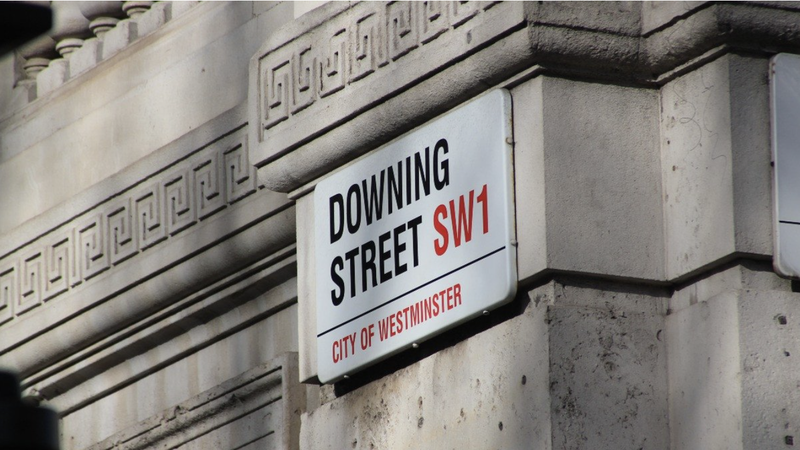
Having spent nine years reshaping Greater Manchester and cultivating an image as the champion of England’s regions, Andy Burnham now stands on the threshold of national power. Whether he can translate his record in Manchester into effective government, and convince financial markets that a more interventionist agenda need not threaten stability, may determine Britain’s political direction for years to come. Although, if the past ten years are to judge by, a new Prime minister in Downing Street will not necessarily assure stability for a long period of time.