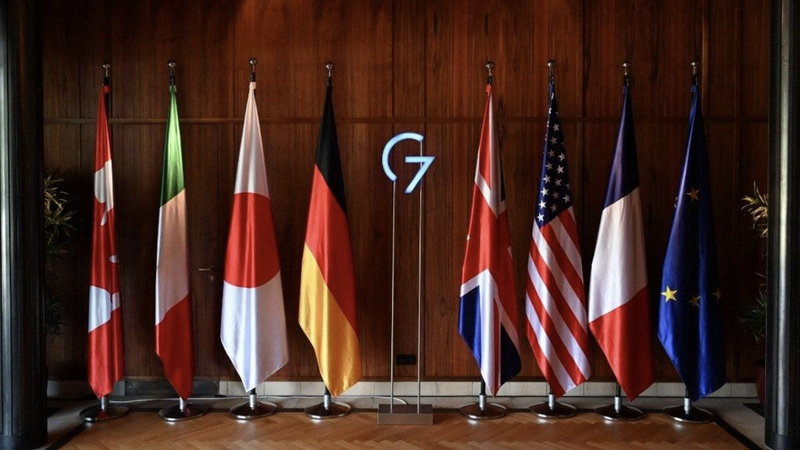
The G7 summit, being held in France, began with what would usually be a very traditional agenda. The big item up for discussion is that of Ukraine, with that country’s President Zelensky present for a meeting with French president Emmanuel Macron, and US president Donald Trump. Other items, including economic growth, as well as NATO defence spending were up for debate between the world leaders of the G7 countries.
Additionally, German chancellor, Friedrich Merz, proposed a new formation, E5, which will unite France, Germany, Britain, Italy and Poland as some of the largest European economies, building on the months of work of the so-called Coalition of the Willing.
Despite these pressing geopolitical issues which have found ample space in this summit, one of the most revealing moments of the summit was the AI working lunch attended by world leaders and leading AI executives. At Evian, artificial intelligence was no longer merely a topic of discussion. For the first time, the people building the technology were effectively brought into the highest level of international political conversation.
From technology sector to geopolitical actor
Beside the usual political and geological significance of the G7, what stood out was the guest list of the AI themed working-lunch, that united seven of the world’s leaders with key names in the artificial intelligence and technology sectors.
Present at the lunch were Sam Altman from Open AI, Dario Amodei from Anthropic, Arthur Mensch from Mistral AI and Demis Hassabis from Google.
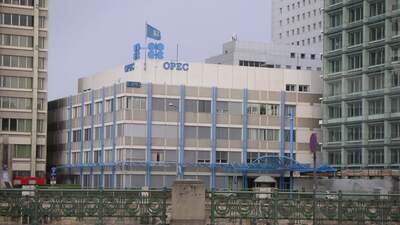
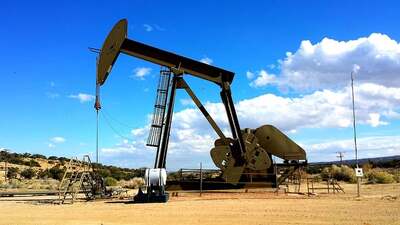
The fact that the organisers of the G7, in this case the French government, felt compelled to organise a lunch specifically for the technology and artificial intelligence sectors suggests a generational change in the intersection between international geopolitics and industry. Whereas just ten years ago, the working lunch may have been held with representatives of the oil and gas industry, and twenty years ago this might have been with representatives of the tobacco industry, today AI represents a fundamentally key industry for international politics.
AI is fundamental not only for economic productivity, on which it has a considerable influence, but also in themes such as national and international security and military capabilities. Indeed, one of the big sectors for growth for AI, especially given the increasingly inflamed nature of several of the world’s warzones, is thought to be that of military capabilities.
AI companies are becoming geopolitical actors. The Evian working lunch symbolised their arrival within the architecture of global governance.
Europe’s AI ambition and the search for technological sovereignty
The presence of the representatives of the AI sector at the G7 meeting will have been without doubt a presence welcomed by US president Donald Trump, who has repeatedly sought for a greater industry presence in ceremonial contexts.
The newly announced E5 meeting, announced by German chancellor Friedrich Merz and to be held in Berlin at the end of this month, will be a crucial moment to consider whether this Artificial intelligence presence will be able to take hold also on a purely European level.
In particular, the European Union and the European continent as a whole have shown signs of wanting to grow more autonomous in certain strategic sectors, especially sectors relating to the ongoing conflicts in Ukraine and in the Middle East.
Europe is trying to coordinate its response to a changing international environment—not only in defence and foreign policy, but also in technology. The presence of the French AI company, Mistral, in an environment that can seem otherwise dominated by US and Chinese techological giants, demonstrates a desire to persevere in the emancipation process of Europe in certain sectors. Artificial intelligence forms a significant part of much broader debate on strategic sectors and the need for greater strategic autonomy.
Just as Europe seeks greater autonomy in defence and energy policy, it is increasingly seeking a place in the race to shape the future of artificial intelligence.
The Evian summit allowed France to present itself as both a diplomatic and technological power.
Governing the future
The future for AI would, from afar, seem to be one of enormous prospects for growth. However, governments across the world face a considerable dilemma. While they want innovation, they push for economic growth and for greater competitiveness, governments are generally seeking also safety and regulation in the position that big tech can assume in our everyday lives.
This very dilemma was captured in the title of the working lunch Ensuring a safe, rapid and effective deployment of AI .
This balancing act is likely to become a permanent feature of international diplomacy.
Future G7 summits may routinely include technology leaders alongside heads of state. If that happens, Evian will be remembered as an early sign of a changing world order: one in which the governance of artificial intelligence becomes inseparable from the governance of global politics itself.