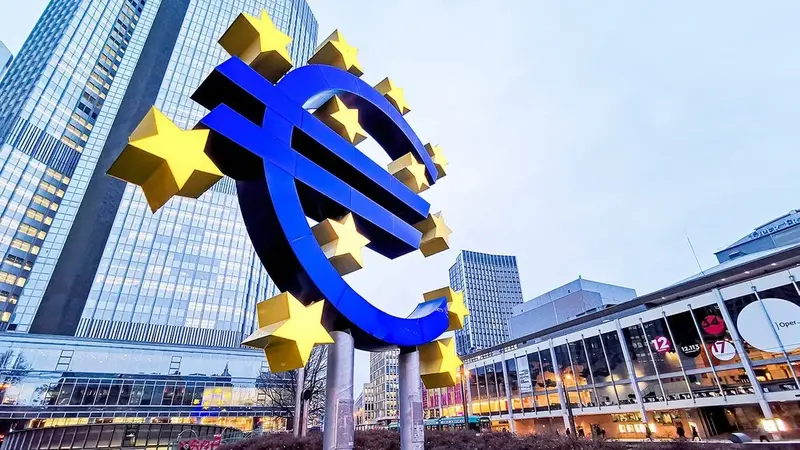
ECB Day has arrived. Today, Thursday, July 23, 2026, the European Central Bank will announce its latest monetary policy decision ahead of the summer recess
The rate announcement is scheduled for 2:15 p.m. CET, when the ECB’s Governing Council will release its policy statement following the meeting.
Thirty minutes later, at 2:45 p.m. CET, ECB President Christine Lagarde will hold her press conference, an event that often proves even more market-moving than the rate decision itself.
Former Barclays executive to Money.it: “The biggest mistake investors can make on ECB Day”
Money.it spoke with Anupam Satyasheel, Founder & CEO of Occams Advisory and formerly Vice President of Liquidity & Capital Management at Barclays Capital, the desk that manages a global bank’s funding, capital, and balance-sheet plumbing from the inside.
Satyasheel is considered a Wall Street veteran for his previous roles at Bank of America Merrill Lynch, Fidelity, Scotiabank.
Asked about the biggest mistake investors could make on ECB decision day, he delivered a straightforward answer:
“Trading the first forty-five minutes”.
According to Satyasheel, this is precisely the mistake the ECB’s communication framework tends to encourage.
“The mechanics invite it”, he explained. “The rate decision is released at 2:15 p.m. CET, while Christine Lagarde’s press conference begins at 2:45 p.m.”
Why the first market reaction is often misleading
The problem, Satyasheel argued, is that the two parts of the ECB’s communication frequently send different signals.
Markets tend to classify the meeting as either hawkish or dovish based on a single word or phrase contained in the policy statement, only to reverse that interpretation once Lagarde starts answering journalists’ questions.
“Markets label an entire meeting hawkish or dovish based on a single adjective in the statement, then re-label it when Lagarde answers her third question”.
As a result, traders chasing the initial market move often end up doing exactly the opposite of what they should: buying at the session highs and selling at the lows.
“The half-life of that initial move is measured in hours, and the investors who chase it systematically buy the top and sell the bottom of the day’s range”.
Why today’s ECB meeting carries even greater headline risk
According to Satyasheel, today’s meeting is particularly vulnerable to this dynamic because the market’s focus is expected to be almost entirely on the tone of the ECB’s communication rather than on the policy decision itself.
“This meeting”, Satyasheel warned, “is unusually vulnerable to that trap because everything hangs on tone rather than action”.
A disciplined approach beats headline trading
Rather than reacting emotionally to the first headlines, the former Barclays executive recommended adopting a disciplined investment framework.
Investors should decide before the meeting which developments would genuinely alter their 12-month investment thesis.
For today’s ECB meeting, those game-changing developments would include, according to the CEO of Occams Advisory:
- A surprise hike
- An explicit signal on September
- A changed characterization of second-round wage effects
Everything else, he argues, should largely be treated as market noise.
Ignore the adjectives, focus on the data
Satyasheel believes investors should allow macroeconomic data - not press conference rhetoric - to drive portfolio allocation decisions.
Specifically, he pointed to three indicators that matter far more than Lagarde’s wording:
- The July inflation print
- Q2 negotiated wages
- The oil price
Those data, he explained, “will tell you more about the ECB’s path than the press conference will”.
They are also the same indicators the ECB itself will closely monitor when determining the future path of monetary policy and interest rates, beginning with the Governing Council’s next meeting on September 9, 2026.
What comes next for European markets?
In another interview with Money.it, Satyasheel also discussed how a hawkish or dovish ECB communication could affect:
- European equities
- Eurozone bank stocks
- EUR/USD
- Italian BTPs and other Eurozone sovereign bonds
- European corporate bonds
His analysis highlights why, on ECB Day, understanding the central bank’s reaction function matters far more than reacting to the first market headline.