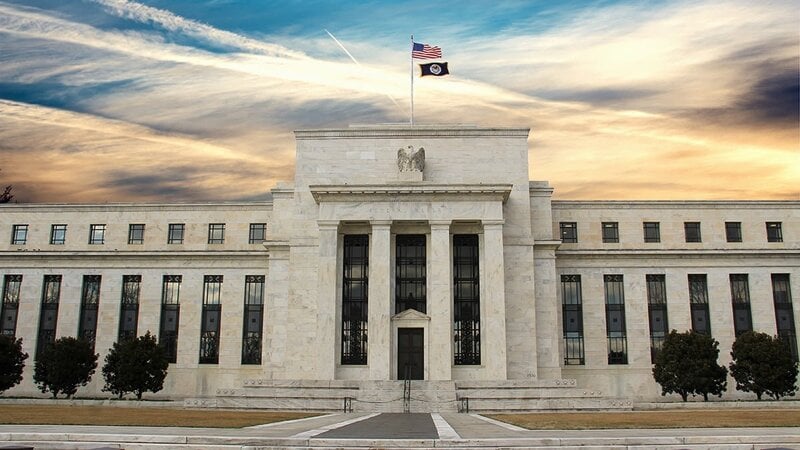
The Federal Open Market Committee (FOMC) opens the first of its two-day meeting today, with the rate decision expected tomorrow, Wednesday, September 16, at 2:00 p.m. ET, followed half an hour later by a press conference from Fed Chair Kevin Warsh. According to the CME FedWatch Tool, futures traders are pricing in a 93% probability of a 25-basis-point hike, which would take the benchmark rate from the current 3.50%-3.75% range to 3.75%-4.00%. It would be the first rate increase since 2023.
A separate reading taken the same morning puts the probability at 90% (Reuters via Business Standard), reinforcing a picture that now points overwhelmingly to a hike. «It is widely anticipated that the FOMC will vote to raise rates by 0.25% at Wednesday’s meeting,» said Brandon Zureick, chief economist at Johnson Investment Counsel, adding that markets will be watching the new «dot plot» above all for clues on the rate path through 2027. Jay Woods, chief market strategist at Freedom Capital Markets, described Warsh’s position as caught «between the hammer and the anvil»: the data support a hike, but August’s core inflation reading could still be used as an argument to stand pat.
Not just Treasurys: the German bund hits its highest level since 2009
The anticipation of a hike is already showing up in sovereign yields. The 10-year US Treasury yield has touched levels not seen since 2007, above 5%, but the freshest data point today comes from Europe: the 10-year German bund yield has risen to 3.55%, its highest level since June 2009, more than 0.85 percentage points above where it stood a year ago. The rise in yields, in other words, is no longer just an American story: it is pushing up borrowing costs across the entire eurozone, including the BTP-bund spread that measures Italy’s risk premium over Germany.
Oil holds firm as a new front opens in Saudi Arabia
This morning Brent crude is trading just under $107 a barrel and WTI around $102.70, a modest recovery after Monday’s pullback (Brent had topped $108 on Monday before retracing). Prices are being kept elevated by a second front that opened on Monday, September 14, when Iran-aligned Houthi forces struck the Saudi air base at Khamis Mushait with missiles and drones, damaging hangars, radar installations, runways and ammunition depots in retaliation for Saudi airstrikes in Yemen.
Meanwhile, Saudi Arabia’s East-West pipeline, already shut down by earlier attacks, remains offline. According to traders cited by Business Standard, Riyadh could run out of exportable stockpiles «within days» if the 4-million-barrel-per-day pipeline does not come back online. Over the weekend, transits through the Strait of Hormuz fell below 10 ships a day, compared with an average of 14 over the previous ten days.
Editor’s note
This article was originally published in Italian on money.it by Ufficio Studi Money.it on September 15, 2026 as «Si apre oggi il FOMC di Warsh, il rialzo dei tassi ormai vale il 90%. Bund ai massimi dal 2009, petrolio ancora sopra i 100 dollari». It has been translated and adapted for an international audience by the Money.it International desk.