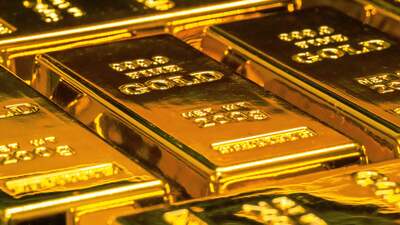


Where can the gold price go from here, after a sharp recovery over the past few sessions? Spot prices for the ultimate safe-haven asset jumped in the session of Friday, August 21, 2026, to above $4,600 an ounce, a three-month high and the strongest level since May 15. Gold futures were bid as well, approaching $4,650 an ounce.
How much further can gold rise? To answer that question, Money.it gathered forecasts from managers, CEOs and analysts, comparing their views on the gold price over the short, medium and long term.
Nigam Arora: Chinese demand is the main short-term driver
Start with the view of Nigam Arora, founder of The Arora Report, a financial newsletter and research firm that has published research on stocks, gold, oil, ETFs, currencies and other assets since 2007.
Arora said that «at this time, our ratings on gold are positive over the short, medium and long term», stressing the importance of the China factor: «In the short term, the most important factor driving gold is not one of the traditional elements generally cited, such as inflation, the dollar, interest rates or geopolitical risk. Based on our analysis, gold’s rise off its lows has been driven mainly by demand from Chinese investors.»
According to Arora, the reason for that buying also has to do with new measures adopted by Beijing to control capital flows, in other words with capital controls.
«The Chinese government is taking further steps to curb capital outflows from the country. Because Chinese investors expect that moving money abroad could become even harder, gold is becoming an increasingly attractive vehicle for preserving wealth inside China. This is a significant flow that many Western investors are not paying enough attention to.»
Gold price: watch India, and Middle East flows too
«A second factor that could become increasingly important in the short to medium term», Arora added, «is India, which remains one of the world’s largest consumers and importers of gold.»
He noted, however, that «India’s foreign exchange reserves have been put under pressure by the rise in oil prices tied to the war with Iran», adding that «since India imports a substantial share of its energy needs, the government has an interest at this point in cutting other imports to preserve its currency reserves.»
Gold imports are therefore «an obvious target». But «duties on gold are not popular in India, so any change to those duties could have a significant impact on physical demand and, as a result, on gold prices.»
Arora finally pointed to «a third short-term factor: the possibility that gold sales out of the Middle East decline.»
The war has pushed some Middle Eastern countries to sell gold to raise cash and fund military spending, or to offset losses tied to oil.
If those sales were to shrink, an important source of supply would disappear, supporting gold prices. Conversely, further disruptions to oil exports could force governments to sell more gold.
Medium term: the biggest risk is a hawkish Fed surprise
Over the medium term, Arora said he believes the two main drivers will be central bank buying and US interest rates, meaning the monetary policy decisions taken by Federal Reserve Chair Kevin Warsh. «Inflation, the dollar, geopolitical risk and investor sentiment will all be important», though, according to the newsletter founder, what will matter even more are «the actual capital flows, rather than the narratives that accompany them.»
On the role of the US central bank, while gold prices have already «broadly» priced in the possibility of «a more accommodative Federal Reserve and lower US interest rates», it is equally true that the bigger risk is the diametrically opposite one, because «a more aggressive Fed is not adequately priced into gold.»
That implies that «if inflation or other economic conditions forced the Fed to keep a restrictive stance for longer than investors expect, or above all if the Fed were forced to raise interest rates, I would expect gold prices to fall.»
In short, «a hawkish surprise is a bigger risk for gold than any further dovish tilt is a new source of upside.»
Arora described himself as generally «bullish on gold», adding that «there is no single argument, single economic data point or single factor that would lead me to change that view.»
Gold price targets over the short, medium and long term
Money.it also heard from Mamadou Kwidjim Toure, CEO and founder of Ubuntu Tribe, who said that «gold remains attractive», while adding that it would be «prudent not to chase it after the strong rally above $4,300 an ounce recorded in recent weeks.»
Toure’s forecasts now call for gold «between $4,250 and $4,600 in the short term, while $5,000 looks to me like an achievable target over the next 6 to 12 months.»
Looking further out, «on a two-to-three-year horizon, I would not be surprised to see gold at $5,500.»
He identified central bank buying as the single strongest support for prices.
Going forward, quotes could be supported more broadly by «lower US rates, especially if real yields fell and the dollar weakened.»
Toure agrees, though, that part of the lower-rate scenario is already embedded in prices, and believes that pushing gold beyond $4,600 would require a Fed clearly oriented toward cutting rates.
What could instead trigger a sharp retreat?
For Toure, the biggest threat would be «another inflationary shock in the United States», because in that case «the Fed would be forced to keep monetary policy tighter for longer, and the effects could be a renewed rise in real yields and a stronger dollar.»
If «central bank demand were to slow as well, then I would become much more cautious on gold.»
The strong support sitting at $4,000
Money.it also spoke with Brett Elliott, director of marketing at APMEX, who believes gold found strong support at $4,000 in June, July and August. If that floor holds, the metal could return to the $4,500-$4,900 area by year-end, and it is already trading around $4,600.
For Elliott too, it will be «the future direction of monetary policy, with any hikes or cuts in rates, that determines how long gold stays range-bound below $5,000 an ounce.»
His view for now is in any case «very bullish», partly for another reason, one that has to do with US public finances:
«As long as the United States government continues to spend beyond its means, gold will remain structurally supported over the long run. At the moment, there does not appear to be any risk that this situation changes in the near future, although a turnaround in that direction would certainly be welcome.»
Elliott then told Money.it that «if prices were to fall again and move convincingly below $4,000 an ounce, the risk would increase that the bull market ends prematurely, especially because we are entering a period of the year historically characterized by strong gold demand, between wedding season in India, Chinese New Year and Christmas in the United States, periods that generally drive an increase in jewelry sales.»
The danger for gold: higher inflation, Treasury yields and dollar
Worth noting as well the comment given to Money.it by Eugenia Mykuliak, founder and Executive Director of B2PRIME Group, who focused on the uncertainty in markets about what Fed Chair Kevin Warsh will do and say, in a situation where markets «may need time to adjust to his communication style.»
Mykuliak recalled that the US CPI (consumer price index) rose in July compared with June, partly because of oil prices, which have moved higher again, and observed that the situation around the Strait of Hormuz, the chokepoint through which a large share of the world’s seaborne crude passes, «remains unresolved.»
With Brent near $90 a barrel, the head of B2PRIME Group warned that inflation more persistent than expected could push investors to price in a rate hike in September, with consequent pressure on gold, driven in particular by the likely rise, as a result of monetary tightening, in «Treasury yields and the dollar.»
Gold at $6,000-$7,000: the role of Western debt
Also worth noting the comment from Philip van den Berge, founder and CEO of Intrinsiqq, an equity research platform, who said he is «bullish on gold» and set out three views on what could happen over the short, medium and long term.
«In the short term, I believe this consolidation phase is set to continue, with the factors pushing prices higher, such as Fed decisions, and still-strong demand keeping the price from falling below the $4,100 area.»
Over the «medium term, we can expect a slightly more bullish target, in the low $5,000s», while over the long term «I see a gold price of around $6,000 to $7,000 as possible, mainly because of rising debt levels in Western countries.»
Van den Berge explained that «because governments cannot indefinitely sustain enormous debt burdens without inflating their own currencies, gold represents the main benchmark against the devaluation of fiat currencies.»
Among the factors in the metal’s favor is «accumulation of gold by central banks», which «are buying more gold to protect themselves from the geopolitical consequences on currency reserves.»
The main threat to a gold rally, according to him, would instead be «a huge, structural global productivity boom, driven by innovations in artificial intelligence, automation and the commercialization of clean energy». Such a situation, in fact, «could cut production costs and increase profits without causing prices to rise. As a result, central banks could keep rates stable, pushing investors to shift capital out of gold and into highly profitable stocks and corporate bonds.»
In that scenario, gold could suffer from the absence of the long-awaited US rate cuts, especially if the Fed were to keep monetary policy restrictive for longer than expected.
Editor’s note
This article was originally published in Italian on money.it by Laura Naka Antonelli on August 23, 2026 as «Prezzo oro, nuove previsioni a Money.it. Non solo Fed, cosa guiderà le quotazioni e fino a dove». It has been translated and adapted for an international audience by the Money.it International desk.