

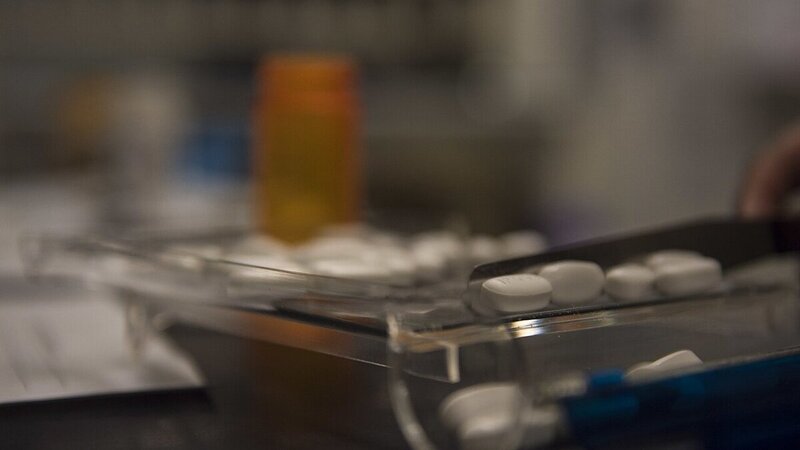
For the 56.1 million Americans enrolled in Medicare Part D as of February 2026, according to KFF tracking of CMS data, the prescription drug benefit looks structurally different from anything they have used before. The $2,100 out-of-pocket maximum announced by the Centers for Medicare and Medicaid Services in its Final CY 2026 Part D Redesign Program Instructions is the rule that matters most: once your spending on covered drugs hits that ceiling in any calendar year, you pay nothing for the rest of the year. Catastrophic coverage now means catastrophic protection, not catastrophic exposure.
That single number is the biggest shift in the program since Part D launched in 2006, and it is the centerpiece of a redesign that also raises the standard deductible, simplifies the benefit phases, and routes a federal subsidy directly into the price of negotiated drugs. The savings are concentrated among the smaller share of beneficiaries who hit very high drug costs in a given year because of cancer, autoimmune disease, HIV, multiple sclerosis, or a stack of brand-name maintenance medications. For everyone else, the benefit is mostly a guarantee against the worst case rather than a monthly check in the mail.
What Actually Changed for 2026
Four shifts define the 2026 Part D benefit, and they all flow from the same statute.
- Out-of-pocket cap rises to $2,100. The $2,000 ceiling that took effect in 2025 is indexed each year to the average increase in Part D drug costs. CMS published the new figure on April 7, 2025: $2,100 for calendar year 2026.
- Standard deductible up to $615. No standalone Part D plan or Medicare Advantage prescription drug plan can charge a deductible higher than $615 in 2026, up from $590 in 2025. Many plans charge less, and some charge none on generic tiers.
- 25% coinsurance in the initial coverage phase. Once you meet the deductible, you pay 25% of covered drug costs until your out-of-pocket spending reaches $2,100. The old “donut hole” — the coverage gap that for years left enrollees responsible for a much higher share of brand-name spending — was eliminated entirely in 2025 and stays gone.
- Negotiated prices and a 10% federal subsidy. Prices for the first ten drugs negotiated by Medicare under the IRA take effect on January 1, 2026. CMS now also pays Part D plans a 10% subsidy on those negotiated prices in the initial coverage phase, designed to keep premiums in check as the benefit gets richer.
How the 2026 Standard Benefit Phases Work
The Part D benefit is now a three-phase structure, and the simplification is intentional. There is no longer a coverage gap, and the catastrophic phase no longer requires any cost sharing.
In the deductible phase, you pay 100% of the cost of your covered drugs until the deductible — up to $615 — is met. If your plan has no deductible on its lowest tier, generic prescriptions skip this phase entirely.
In the initial coverage phase, you pay 25% coinsurance on covered drugs. Your plan picks up most of the rest, with the manufacturer chipping in roughly 10% on brand-name “applicable drugs” through the Manufacturer Discount Program. This phase ends the moment your out-of-pocket spending reaches $2,100.
In the catastrophic phase, you pay nothing. CMS pays a reinsurance subsidy, manufacturers continue to discount brand-name drugs, and your plan covers the remainder. Before the IRA, beneficiaries in this phase still owed 5% coinsurance, which on a $20,000-a-year cancer drug meant another $1,000 of unbudgeted exposure. That is gone.
Who Saves the Most
The cap is binary: either you reach it in a given year or you do not. For the median Part D enrollee filling four or five generic prescriptions a year, the redesign barely shows up on a monthly statement. For someone on a $7,000-a-year brand-name medication, it changes the planning conversation entirely.
Three groups see the largest cash savings:
- High-cost specialty drug users. Patients on cancer therapies, autoimmune biologics like Enbrel or Stelara, MS disease-modifying drugs, or HIV antivirals routinely cleared the old $8,000+ true-out-of-pocket threshold to reach catastrophic coverage. Under the new design they hit $2,100 instead, often in the first quarter, and pay nothing for the next nine months.
- Multiple-prescription seniors. A retiree on Eliquis for atrial fibrillation, Jardiance for type-2 diabetes, and Januvia would historically have spent $4,000 to $6,000 a year out of pocket. With those three drugs all on the negotiated-price list and the $2,100 cap in force, total exposure typically lands well below $2,500.
- Insulin users. The IRA already capped insulin copays at $35 per month per covered insulin product in 2023. That cap continues, and any insulin spending also counts toward the $2,100 ceiling.
For households trying to plan a retirement budget, the practical change is that worst-case drug costs are now quantifiable. The headline number to write on the planning worksheet is $2,100 plus monthly premiums. Before the redesign, the right number to write was “we don’t know.”
The Medicare Prescription Payment Plan: Spread Your Costs Across the Year
A second, less-discussed feature also continues into 2026: the Medicare Prescription Payment Plan. Introduced in 2025, it lets any Part D enrollee spread out-of-pocket drug costs across monthly installments over the calendar year rather than paying the full price at the pharmacy counter. The total cost is the same; the cash flow is smoother.
The program is most useful for people who hit the cap early in the year. Without the payment plan, a January chemotherapy fill could mean a $2,100 bill in week one. With it, the plan invoices the cost in monthly chunks through December. Enrollment is voluntary and free, and you can opt in either before the year starts or at any point during the year by contacting your Part D plan.
Negotiated Prices: The First Ten Drugs
January 1, 2026 is also the first day Medicare-negotiated prices take effect. The drugs were chosen in 2023 because they account for an outsized share of Part D spending and have been on the market without competition for years. They include Eliquis (apixaban), Jardiance (empagliflozin), Xarelto (rivaroxaban), Januvia (sitagliptin), Farxiga (dapagliflozin), Entresto (sacubitril/valsartan), Enbrel (etanercept), Imbruvica (ibrutinib), Stelara (ustekinumab), and the insulins Fiasp and NovoLog (insulin aspart).
The new “maximum fair prices” cut list-price exposure by roughly 38% to 79% depending on the drug, according to CMS. Plans must include the negotiated drugs on their formularies, and beneficiaries should see lower coinsurance dollar amounts at the counter — though the exact savings depend on the plan’s tier structure. Pharmacies dispense the drugs at the lower negotiated prices, and a separate federal subsidy reimburses the supply chain for the gap.
A second cycle of 15 additional drugs — including the diabetes and weight-loss drugs Ozempic and Wegovy — has already been negotiated, with prices effective January 1, 2027.
The Trade-Offs: Premiums and Plan Choice
A richer benefit is not free. Stand-alone Part D premiums rose noticeably in 2025 as plans absorbed higher liability under the new structure, and several large insurers exited the standalone PDP market or trimmed their offerings. CMS has used a Part D premium stabilization demonstration in both 2025 and 2026 to dampen the increases, but enrollees should expect more variation across plans this year, both in monthly premiums and in formularies.
The other change worth watching is plan availability. The number of standalone Part D plans on the market has fallen meaningfully since 2024, which means Medicare Part B premiums in 2026 are $202.90 a month is no longer the only Medicare line item that needs an annual look. Comparing Part D plans during Open Enrollment is now a real exercise, not a formality.
What to Do During Open Enrollment
Medicare Open Enrollment runs from October 15 to December 7 each year, and 2026 changes make the comparison more important, not less. A short checklist for the fall window:
- Pull your full prescription list, including doses, and run it through the Medicare Plan Finder on Medicare.gov. The tool prices each plan against your actual drugs, including the new negotiated prices and the $2,100 cap.
- Confirm your pharmacy is in-network on the plan you pick. Pharmacy networks have been narrowing as plans look for cost offsets.
- If you take any of the ten negotiated drugs, verify the plan lists them at the negotiated price, not at an old higher tier.
- If you are still working past 65 with employer coverage, check whether your group plan still meets the new creditable coverage standard. CMS revised the test for 2026 because the redesigned Part D benefit is richer, and the simplified determination now requires employer coverage to pay at least 72% of prescription drug expenses, up from 60%.
For seniors who have not yet enrolled in Part D, the late-enrollment penalty still applies: 1% of the national base beneficiary premium for every full month you went without creditable coverage after your initial enrollment window. That penalty compounds for life.
Bottom Line
The 2026 Part D rules will not change anything for the senior who fills two generics a quarter. For the millions who do hit four-figure annual drug bills, the math is finally bounded: $2,100 out of pocket, then nothing for the rest of the year, with a payment plan available to smooth the cash flow and a list of negotiated prices that takes some of the brand-name premium off the table. Combined with what the average Social Security check Americans are getting in 2026 looks like — around $2,071 a month for retired workers — and the rising Part B premium, the redesign restores a meaningful chunk of disposable income for retirees with serious medication needs.
For the planning worksheet, the new line items are simple. Worst-case Part D out of pocket: $2,100. Average Part B premium: $202.90 a month. The unbounded number is gone. That alone is worth the trip back to the Plan Finder this October.
[1]