
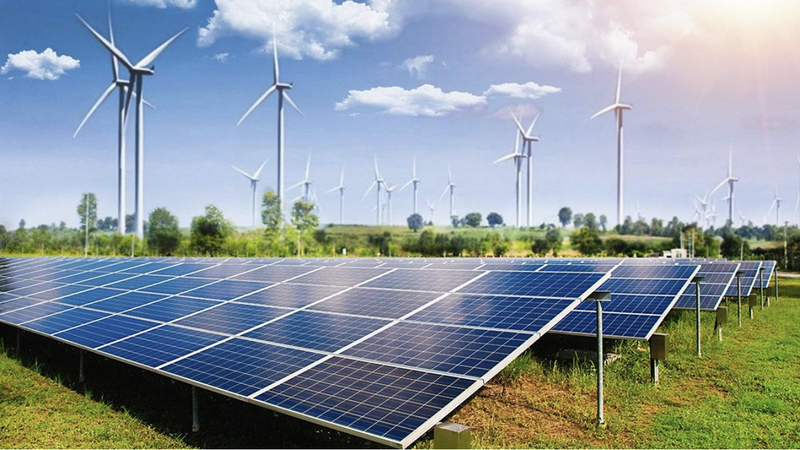
The latest data suggests that 32 per cent of the world’s energy needs are met by renewable sources, principally wind, solar and hydroelectricity. A sector that is growing exponentially, certain factors, such as international instability, have encouraged a speed-up in the transition away from fossil fuels towards new, clean energy sources.
But what is the future of clean energy? And which countries are the largest users of these new technologies that fuel a whole renewables industry?
The champions
The champions are those countries leading the way in the transition to renewables. In some cases, such as in Albania, Bhutan and Iceland, these countries develop one hundred per cent of their electricity from renewable sources, whereas the others are all above ninety per cent of renewable use. Some, such as Albania and Norway rely on hydroelectricity as the main source, others, like Iceland, use other sources such as geothermal.
These countries have relied upon green energy for decades, and their infrastructure has often been designed specifically for renewable sources. Principally small countries, with geographically favourable conditions for renewable energy, these factors allow for a quicker and easier transition from other sources to renewables.
The Transitioners
These countries are predominantly European, and have in the past two decades, adopted ever greater renewable energy sources. They all generate at least fifty per cent of their electricity through renewable energy sources or are just below the fifty per cent threshold.
In the cases of Croatia (76 per cent of total electricity) and Italy (49 per cent), a large amount of this energy is generated through hydroelectrical sources, whereas in Portugal hydro- and wind energy are the two greatest methods of electricity generation. In the UK (52 per cent) as well as in Sweden and Germany, the preference is for wind energy.
This shift accelerated after the 2008 financial crisis and Russia’s growing geopolitical assertiveness. Many European countries are making the move towards a policy of transition: Germany’s Energiewende , devised during the 2010s seeks to stop the use of coal fired power stations, and move quickly to low carbon sources. Meanwhile, the UK and the Netherlands have constructed considerable offshore wind farms in the North Sea, which account for thirty percent of both country’s electricity production.
In Italy, there is a strong use of hydroelectricity, and an increasing use of solar power which has now overtaken hydroelectricity. However, the country still depends on imported gas to fire many of its traditional, fossil fuel fired power stations.
These countries are in transition, and there are many cases where traditional power stations are used alongside renewable sources, especially in moments when the green energy sources are not able to assure the large demand for electricity.
One slightly more complex case in the transitioners is China. Although still heavily dependent on coal, it is also the world’s largest investor in carbon-free energy, especially in solar and hydroelectric power.
The sceptics
In these countries low-carbon energy sources have had a very low uptake, and account for a total of less than thirty per cent of total electricity production. In the USA (24% of total) and Russia (17%), countries with wide access to crude oil and natural gas reserves, the most important source of electricity generation is fossil fuels.
These countries often depend heavily on the fossil fuel industry as a major component of their economies, as is the case in the USA and in Russia. Additionally, there is often political resistance from certain factions close to the oil and gas industry, that makes changes to the existing situation difficult. France is the one execption to this rule, with its strong preference for nuclear power stations, accounting for 72.3 per cent of all total electricity generated in 2020.
Additionally, the costs of undertaking a transition to renewable energy mean that many of the world’s poorest countries are not able to make this transition, or there is little economic incentive to move away from cheaper fossil fuel alternatives especially when the country is still developing economically.
The future
Despite rapid growth in renewable energy production, the transition remains very uneven across the world. Geography, economics and politics all shape how easily and how quickly countries are able to move away from fossil fuels. While some nations already produce almost all of their electricity from renewable sources, others remain strongly dependent on oil, gas or coal. Nevertheless, falling costs in solar and wind technology, combined with international pressure to reduce emissions, suggest that renewable energy will continue to expand rapidly over the coming decades and will also become increasingly accessible for developing countries, many of which have conditions suitable for green energy sources.