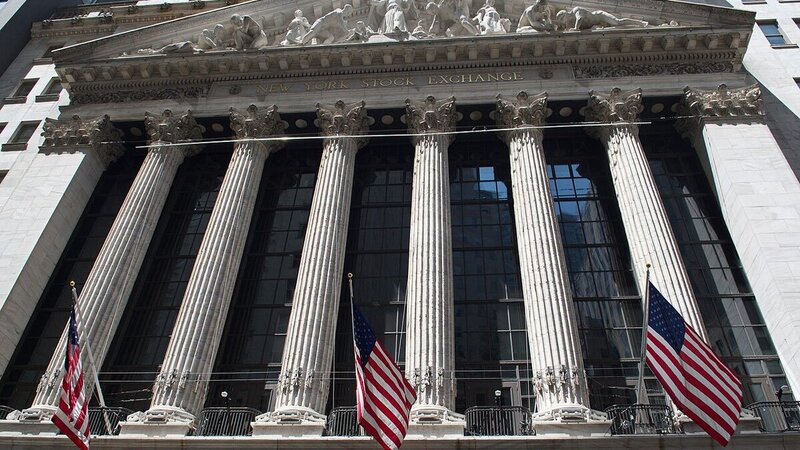
US stock futures were little changed early Friday. Contracts on the S&P 500 were flat, Dow Jones Industrial Average futures edged up about 0.1%, and Nasdaq-100 futures slipped roughly 0.15%. The muted open follows a fresh record: the S&P 500 finished Wednesday at 7,798.99, its first close above 7,800, while the Nasdaq Composite ended at 26,803.03.
Asian markets set a firmer tone overnight. South Korea’s KOSPI climbed more than 1.4% and Japan’s Nikkei 225 added about 0.8%, extending a global rally built on cooling inflation and rising odds of Federal Reserve easing. European benchmarks opened mixed.
The main event: July retail sales
The week’s marquee US release lands before the bell. The Census Bureau publishes July retail sales at 8:30 a.m. ET, and it caps an inflation-and-consumption trio that has driven the tape all week. In June, retail sales rose 0.2% month over month and were up 6.7% from a year earlier.
The number carries extra weight this month. A weak July jobs report flipped the Fed narrative toward cuts, so investors want to know whether the US consumer is still spending under a restrictive rate regime. A soft reading would reinforce the slowdown story and the case for easing. An unexpectedly strong print could revive concerns that demand — and price pressure — is more resilient than the doves assume.
Inflation cooled going in
Retail sales close a week in which the inflation data broke in the market’s favor. July CPI rose 0.1% month over month, in line with forecasts. Wholesale prices were even softer: the July Producer Price Index was unchanged on the month, below the 0.2% consensus, held down by a 5.7% drop in gasoline prices, according to the Bureau of Labor Statistics. On an annual basis, final-demand prices were up 4.7%.
The soft producer-price data pushed traders to lift the odds of a September rate cut, cementing the case for easing over a hold. Interest-rate futures now lean toward at least a quarter-point reduction when the Federal Open Market Committee meets on September 15-16. The cooler PPI removed one of the last data hurdles between the Fed and its first cut of the cycle. The central bank has held its target range at 3.50% to 3.75% since June.
Bonds, the dollar and commodities
The 10-year Treasury yield traded near 4.2%, holding a narrow range as the market waited for retail sales. A downside surprise on spending would likely press yields lower and steepen the case for easing — the mechanism laid out in this explainer on how central banks loosen policy. The US dollar held steady against major peers.
In commodities, WTI crude hovered near $82 a barrel and Brent traded around $87, supported earlier in the week by supply-route jitters. Gold stayed firm as lower real-yield expectations kept a bid under the metal.
The bigger backdrop
Friday’s data is more than a one-day catalyst. The July retail-sales report is one of the last major consumer readings Fed Chair Kevin Warsh will hold before his August 28 keynote at the Jackson Hole symposium, where markets will parse every word for the timing and pace of cuts. With the S&P 500 at all-time highs and earnings season winding down, the burden of proof now sits with the macro data — much as it did during Thursday’s tech-led session, recapped in our look at how chip stocks powered the pre-open.
What to Watch for the Open
- Retail sales, 8:30 a.m. ET: consensus is for a modest monthly gain. Watch the control-group figure that feeds GDP, plus any downward revision to June.
- Rates reaction: a soft print should push the 10-year yield lower and firm September cut odds; a hot print does the opposite.
- Record-high risk: with the S&P 500 at 7,798.99, a disappointing consumer read is the most likely trigger for profit-taking.
- Fed speakers and Jackson Hole: today’s number frames the debate heading into Warsh’s August 28 address.
Bottom line: futures are quiet, but the consumer holds the key. Retail sales will decide whether the record-setting rally extends into the weekend or pauses for breath.