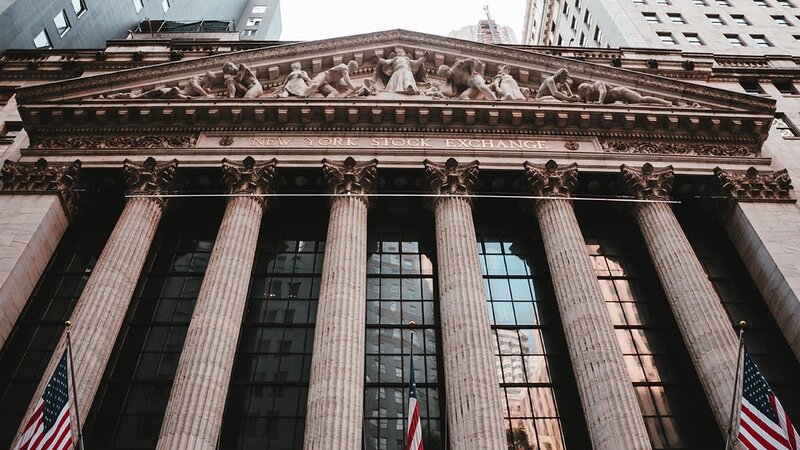
US stock futures jumped on Monday as oil prices tumbled. Contracts tied to the S&P 500 and the Dow Jones Industrial Average each rose about 0.8% before the open, while Nasdaq-100 futures gained roughly 1.6%, according to premarket data. The move kicks off what Wall Street expects to be the busiest week of the quarter.
The catalyst was crude. Brent crude, the international benchmark, fell more than 7% to around $90 a barrel, while US West Texas Intermediate slid about 6.5% to near $83. Prices dropped after Washington and Tehran paused hostilities over the weekend, easing the supply fears that had gripped oil markets for nearly two weeks.
Iran signaled it would hold off on further attacks as long as the United States also refrains from striking, raising hopes that negotiations could restart. For investors who had watched energy costs climb through mid-July, the retreat offered immediate relief — and a reason to buy risk assets ahead of a pivotal Fed meeting.
Why Falling Oil Matters Before Wednesday
Cheaper oil does more than lift airline and consumer stocks. It takes pressure off the Federal Reserve, which delivers its interest-rate decision on Wednesday, July 29, at 2:00 p.m. ET.
Energy has been the main engine of US inflation this year. The Bureau of Labor Statistics reported that the Consumer Price Index rose 4.2% in the year through May, the fastest pace since 2023, with energy prices up 23.5% over the same period and gasoline up more than 40%. “The energy index accounted for over 60% of the overall CPI increase in May,” the BLS noted. Core inflation, which strips out food and energy, was far tamer at 2.9%.
That distinction matters. If oil keeps sliding, the inflation spike that pushed some policymakers toward another rate hike could fade on its own. The Fed, now led by Chair Kevin Warsh, is widely expected to hold its benchmark rate at 3.50% to 3.75% this week. But the door to a later increase remains open, and markets have questioned whether Warsh’s hawkish Fed will actually pull the trigger given uneven jobs data. This is a non-SEP meeting, so there will be no updated projections or “dot plot” — putting the spotlight squarely on Warsh’s press conference.
The Busiest Week of the Quarter
The Fed is only half the story. Several of the Magnificent Seven — the megacap group of Alphabet, Amazon, Apple, Meta, Microsoft, Nvidia and Tesla — report earnings this week. Together they carry an outsized weight in the S&P 500, and their guidance on artificial-intelligence spending has repeatedly swung the index in recent sessions, including last week’s chip-driven swings.
Analysts expect the group to keep outgrowing the rest of the market, with Magnificent Seven earnings projected to rise well into the double digits in 2026 versus far more modest growth for the other 493 companies in the index. Any disappointment on AI capital spending or cloud revenue could quickly overwhelm the goodwill from lower oil.
What to Watch for the Open
- Oil prices: whether Brent holds its drop below $90. A durable move lower eases the inflation story; a rebound revives it. Investors seeking exposure can track energy-focused ETFs.
- The 10-year Treasury yield: falling oil and cooler inflation bets tend to pull yields down, a tailwind for tech.
- Megacap earnings: guidance on AI spending will matter more than the headline numbers.
- Wednesday’s Fed decision: the rate is likely unchanged, so watch Chair Warsh’s tone for clues on the path into year-end.
For now, the tape is friendly: oil is falling, futures are green, and the week’s biggest tests are still ahead.