

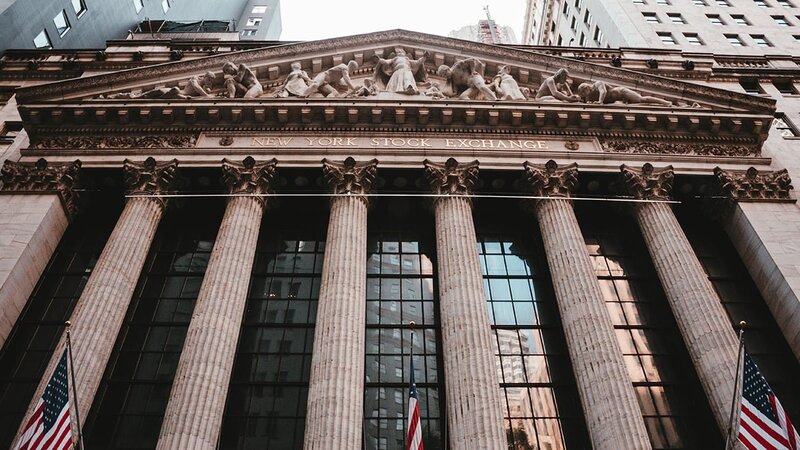
S&P 500 futures were down roughly 0.4% in pre-market trading on Friday, with Nasdaq 100 futures also softer and Dow futures little changed. The dip follows a session in which the S&P 500 climbed 0.77% to 7,501.24, the Nasdaq Composite rose 0.88% to 26,635.22, and the Dow Jones Industrial Average added 0.75% to 50,063.46, with all three benchmarks setting fresh closing records or reclaiming key round numbers. The index is heading into Friday with a seventh straight weekly gain on the table, the longest winning streak since 2024.
That backdrop matters because Thursday’s rally happened despite — not because of — the macro picture. Tuesday’s Consumer Price Index showed annual inflation at 3.8%, the hottest since May 2023. Wednesday’s Producer Price Index jumped 1.4% month over month and 6.0% on the year, the largest annual print since April 2022, according to the Bureau of Labor Statistics. Rate-cut bets that started the year priced at three quarter-point reductions have effectively been erased. And yet, stocks marched higher on strong earnings, optimism around US-China trade talks, and a 13% pop in Cisco after the networking giant beat on third-quarter results.
Powell’s last day, Warsh’s first weekend
The political timeline overlays the price action. Jerome Powell’s second four-year term as Fed chair expires today, ending an eight-year tenure that spanned the pandemic shock, the 2022 inflation surge, and the long plateau of the federal funds rate at 4.25%-4.50%. The Senate confirmed Kevin Warsh as the seventeenth chair on May 13 in a 54-45 vote, with Pennsylvania Democrat John Fetterman the only senator to cross party lines. In a break with tradition, Powell is expected to remain on the Fed’s Board of Governors rather than depart the building, an unusual setup that gives Warsh a sitting predecessor on the FOMC.
Warsh inherits an awkward inbox. President Donald Trump openly picked him to deliver lower rates, but the back-to-back CPI and PPI prints this week have pushed the bond market in the opposite direction. We laid out the tension on Monday in what the new chair will have to choose between. His first scheduled FOMC meeting is June 16-17.
Bonds, the dollar and what’s on the calendar today
The 10-year Treasury yield traded around 4.45% late Thursday, easing slightly from Wednesday’s intraday peak near 4.49% but still parked at the highest band since last summer. The 2-year yield hovered near 4.0%, leaving the 2s/10s spread positive at roughly 40 basis points, a curve that has steepened out of inversion as the market has pushed rate cuts further into the future. For readers wrestling with how yields, prices and rate expectations interact in real time, our explainer on how bond yields work walks through the mechanics.
In commodities, Brent crude traded near $106 a barrel on Thursday, with WTI just below at roughly $102, as a fragile Persian Gulf ceasefire kept some of the Iran risk premium baked into prices. Gold hovered around $4,700 an ounce, well off January’s record near $5,590 but still elevated. The US Dollar Index (DXY) was firm against most major currencies after another move higher in real yields.
The macro calendar is light but not empty. The Federal Reserve releases the Industrial Production and Capacity Utilization report for April at 9:15 a.m. ET. The March print showed industrial production falling 0.5% month over month, with capacity utilization at 75.7%, roughly 3.7 percentage points below its long-run average. A weak repeat would feed the soft-landing narrative the equity bulls still need to keep this rally honest. A surprise to the upside would lock in higher-for-longer rates and add pressure to the long end of the curve — the same pressure that, on Wednesday, the pre-PPI pre-open piece flagged as the swing variable for the week.
Stocks in focus and the OPEX wildcard
Today is also the third Friday of the month, which means monthly options expiration. Trillions of dollars in S&P 500-linked options notional are set to roll off, according to dealer estimates routinely cited by Bloomberg and Goldman Sachs. OPEX days at all-time highs tend to produce sharper intraday moves as dealers rebalance gamma exposure into the close, particularly in the final hour.
On single stocks, Nvidia closed at $225.83 on Thursday, with Wall Street already squaring books ahead of first-quarter fiscal 2027 earnings on May 20. The company has guided to roughly $78 billion in revenue, plus or minus 2%, with non-GAAP gross margins around 75.0%; consensus has crept slightly above that midpoint to about $78.98 billion, with adjusted EPS of $1.78. Any miss on either line would land in a tape that has been pricing AI-driven capex as a structural, not cyclical, story. Outside tech, watch retailers after Thursday’s April retail sales report fed the bull case, and homebuilders, which remain the cleanest read on what 4.45% Treasury yields do to housing demand.
What to Watch for the Open
A handful of catalysts will set the tone in the cash session:
- 9:15 a.m. ET — Industrial Production (April). A negative print would relieve the rate-path debate. A positive surprise would not.
- Treasury yields. A 10-year drift back above 4.50% would test the rate-sensitive corners — regional banks, REITs, small caps.
- Brent and WTI. Any fresh headline out of the Persian Gulf will move energy and, indirectly, next month’s PPI.
- Options expiration. Expect a noisier last hour as dealers unwind hedges into the 4:00 p.m. ET close.
- Nvidia. The single most-watched name into next Wednesday’s report. Sentiment here will leak into the broader semi complex all day.
A consolidation day at the records would not break the trend. The rally’s problem is not its level — it is its narrowness. As long as the 10-year stays below 4.50% and Nvidia clears the bar next week, the path of least resistance remains higher. If either condition slips, Friday’s modest pullback will look less like a pause and more like the start of a re-rating.
[1]