
8:30 a.m. Eastern. The Bureau of Labor Statistics releases the April Consumer Price Index. Within minutes, the fed funds futures curve reprices itself violently in the wrong direction for anyone long stocks. Within hours, the Senate confirms Kevin Warsh as a Federal Reserve governor by 51-45, clearing him to be sworn in as Chair by the end of the week. Two events, one Tuesday, and a single conclusion that Wall Street is still refusing to draw: the Fed’s toolbox is empty, and the bull market that financed itself on the assumption that it wasn’t is running on borrowed time. We had warned, in yesterday’s curtain-raiser on this very print, that a 3.8 handle would do exactly this. It did exactly this.
Headline inflation rose 3.8% year-over-year in April, the biggest annual jump since May 2023. Core CPI, which strips out food and energy, ticked up to 2.8%. Both numbers came in above consensus. The monthly print of 0.6% was driven by an energy index that surged 3.8% in a single month, accounting for more than 40% of the entire headline gain — a near-mechanical translation of the Iran conflict and the still-shuttered Strait of Hormuz into the American household budget. The bond market reacted as it always does to data the equity market wants to ignore: the 10-year Treasury yield climbed and Polymarket traders now assign a 61.9% probability to zero Federal Reserve rate cuts in 2026. CME FedWatch has quietly shifted to pricing rate hike odds above one-in-three by January 2027. BofA Global Research, in a note dated May 12, told clients to expect the first cut not this year, not next quarter, but in mid-2027.
This is not the inflation Wall Street thought it had priced. For three years, the consensus narrative held that the post-pandemic shock was unwinding on a glide path, that services inflation was sticky but slowing, and that the only question was whether the Fed would cut three times or four. April broke that narrative. The acceleration from March’s 3.3% to April’s 3.8% is not the residue of demand. It is a supply shock — the same kind that flattened the developed world in 1973 and 1979, and the same kind no central bank can fix with a quarter-point move in either direction. Saudi Aramco CEO Amin Nasser told markets last week that the world is losing roughly 100 million barrels of supply each week, and that “any market normalization” could slip into next year. The Federal Reserve cannot print oil. It cannot reopen the Strait. It has been demoted, in real time, from the protagonist of every market story since 2008 to a spectator.
Why Wall Street keeps buying. Bertrand Russell, writing about induction in The Problems of Philosophy in 1912, told the story of a chicken on a farm. Every morning the farmer arrives and feeds him. The chicken, a competent empiricist, learns to expect the feeding. On the morning his confidence is at its peak, the farmer wrings his neck. Nassim Taleb, in The Black Swan, updated the metaphor for an American audience — the chicken became a turkey, the dinner table became Thanksgiving — and used the new version to describe the danger of betting on a future that looks exactly like the past, right up to the moment it doesn’t. The American equity investor of the last seventeen years has been Russell’s chicken and Taleb’s turkey. Every shock — 2011, 2013, 2015, 2018, 2020, 2022 — was met by a central bank that arrived with the feed bucket. The reflex is now so embedded that when the data say something fundamentally different is happening, the equity market still rallies, because surely, surely, the farmer is coming with the cuts. Tuesday was the morning the farmer didn’t.
The Warsh paradox. The cleanest measure of how stuck the Fed has become is to look at the man Donald Trump nominated to run it. Kevin Warsh was chosen because Trump, openly and on the record, wanted rates lower. Warsh’s confirmation hearings dwelled on his calls for “regime change” at the Fed and his belief that the benchmark rate can come down. He arrives at the Eccles Building on Friday, the same week the April CPI report still sits on every desk in the FOMC, with a market that is pricing him to do the opposite of what he was hired to do. He has told the Senate he will not be Trump’s “sock puppet.” But the choice he faces is not a choice between independence and obedience — it is the choice between credibility and pain. Cut into 3.8% headline inflation and watch the dollar fall, the bond market revolt, and the inflation expectations he is sworn to anchor start to drift. Or stand pat, watch equities reprice the cut-rate fantasy out of their multiples, and absorb the political consequences of doing nothing while a President who picked him publicly demands action. There is no soft option. Trump picked Warsh to cut rates, and he may have to hike instead.
The controvoice, briefly. The honest objection to all of this is that the April shock is “transitory” — that Hormuz reopens, oil collapses back below $80, headline inflation normalizes by Q3, and the rate-cut path comes back into view. It is a serious argument. It was also the argument made in 1973, in 1979, in the 2011 Libya shock, in the 2022 Russian invasion. Each time, the shock was real long enough to embed itself into wage and price expectations, and the central bank found itself fighting not the original disturbance but its echo. Powell himself, asked in March what oil would do for the rest of 2026, gave the only intellectually honest answer available: he said he did not know, that it depended on how long the Strait stayed closed and how quickly it could reopen. If the man who sat in the chair until this week does not know, the investor who is long the S&P 500 because “the Fed has our back” should ask which Fed, doing what, with which tool. The honest definition of inflation does not depend on what Wall Street wishes it were; it depends on what the price index actually does.
The bull market of 2026 was built on a promise that has just been burned. For five months equities priced in a Fed that would arrive with feed buckets. For two days the data, the bond market, and the politics of a Fed transition have screamed that the Fed will arrive with nothing at all. The S&P 500 closed Monday at a record 7,412 — a print Wall Street celebrated in the same week Brent traded above $107 and oil tankers sat idle near Bandar Abbas, a juxtaposition we flagged on these pages just days ago as the kind of cognitive dissonance that does not survive contact with a CPI print. By Tuesday’s bell the index had given back 0.4%, the Nasdaq 0.65%, and the Dow 0.21% — small numbers that read more like a clearing-of-throats than a verdict. The verdict comes when the market finally accepts what the bond market and Polymarket already have.
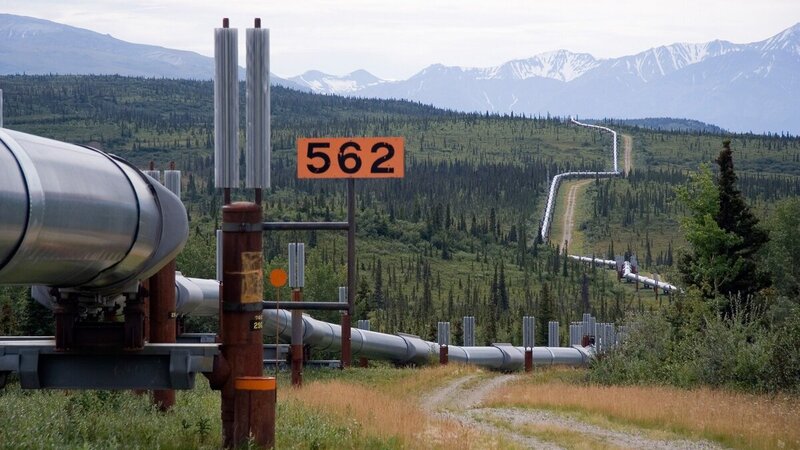
The Fed only has a hammer. The problem is no longer a nail. It is a pipeline. And the investor still long because the central bank has his back should ask, after April, which back, and which bank, and with what tool. The answer is none.
[1]