
An unprecedented energy, and not just in terms of renewables. A single solar panel capable of replacing as many as 20 nuclear reactors? Yes, it’s all true. Obviously, we’re looking at something that’s still in the experimental phase but already has a time horizon: 2040 (so, in less than 15 years).
And we’re not even looking at the usual avant-garde slogan, full of words and little substance. The data, numbers, and objectives come directly from Japan, a country that understands nuclear power and energy—even negatively—and that demonstrates with facts that it is always punctual, even when the territory is unexplored by most. The super-photovoltaic panel strategy is part of the country’s roadmap to achieve zero emissions by 2050 and is much more than a blueprint, given that the technology it will use already exists.
The Japanese Ministry of Industry is banking on precisely this. And who knows, perhaps many other countries—even in Europe, for example—with similar goals could draw on Japanese technologies. While yet another oil-based war is being fought on the other side of the world, someone is actually taking action to save the planet (and the human race). Here’s what we know about photovoltaics, which could change the world forever.
Solar energy beats nuclear energy: how the Japanese technology that replaces 20 nuclear power plants works
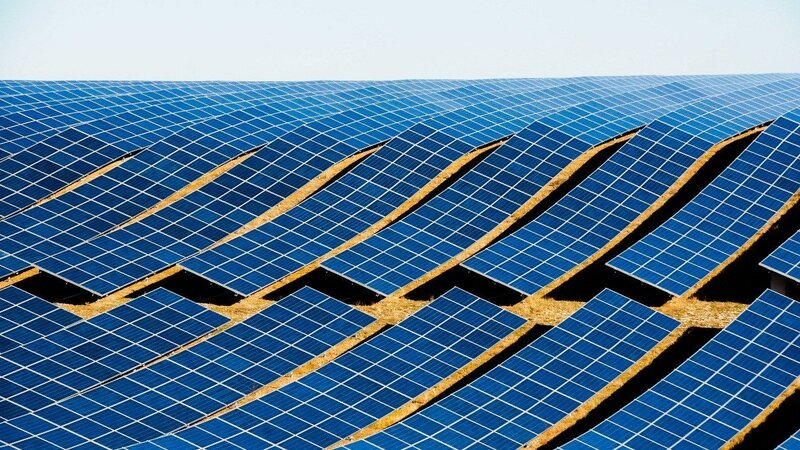
The key to this energy revolution lies in perovskite solar cells (PSCs), a radically different technology than traditional silicon panels. We’re talking about ultra-thin modules—up to 20 times thinner—lightweight, flexible, and, above all, adaptable to any surface. No longer just photovoltaic fields: these cells can be integrated into building glass, facades, car roofs, or even urban streetlights.
Technically, PSCs use perovskite-based materials capable of achieving theoretical efficiencies exceeding 30% (with actual peaks already exceeding 26% in the laboratory), while reducing energy consumption in production by up to 60% compared to traditional panels.
But the real leap is industrial: thanks to processes like roll-to-roll, Japan aims to produce up to 1,000 square meters of panels per hour, paving the way for widespread deployment.
The roadmap is already mapped out: by 2030, the aim is to achieve a significant initial production capacity (about 1 GW per year), while the final goal is set for 2040, when the national PSC system should generate 20 gigawatts of energy, equivalent to 20 nuclear reactors and enough to power approximately 6 million homes.
The first tests are already underway, even in complex environments such as public infrastructure and high-density urban areas. At the same time, the country is developing integrated systems with energy storage to ensure continuity: solar generation during the day, lithium batteries at night. Challenges abound, from material durability to exposure to humidity and heat, but advances, such as advanced coatings that promise a service life of over 25 years, indicate a technology now ready to leave the lab.
Can photovoltaics really save the world?
The question is ambitious, but Japan has already begun to answer with numbers. After the 2011 Fukushima (nuclear) disaster, the country accelerated its energy transition: today, solar accounts for approximately 10% of national electricity generation, compared to just 1.9% ten years ago. The goal is even more audacious: to reach 36-38% energy from renewable sources by 2030 and go beyond this with PSCs by 2040.
The potential impact is enormous, and not just domestically. If this technology were scaled globally, it is estimated that CO₂ emissions would be reduced by up to 2 billion tons per year by 2040. But there is another, less visible but equally crucial, front: geopolitics.
China dominates photovoltaic production today (over 80% of the market), but Japan is seeking an alternative path, focusing on innovation and strategic materials like iodine, of which it is among the world’s leading producers. This means less dependence on imports and greater energy security.
There is thus a new global energy balance. And cities—from Tokyo to Singapore—could become the first to benefit, transforming into distributed, smart power plants.
How much does a super solar panel cost? Everything we know about investments and economic impact
Behind this race for the energy of the future is a massive investment. The Japanese government has already allocated approximately 157 billion yen (almost 840 million euros) in direct subsidies, in addition to 60 billion yen invested in research and development and additional funds dedicated in recent years. Overall, the plan exceeds 1.3 billion euros, with further industrial investments that could bring the total to almost 2 billion.
On the cost front, perovskite cells are currently still more expensive than traditional panels—up to 3-4 times more—but the trend is rapidly declining. In 2025, an average cost of around 20 yen per watt was estimated, set to drop to 10 yen/W by 2040 (about 5 euro cents), making this technology competitive on a large scale.
Production is also becoming more efficient: the cost of perovskite films has already dropped to about 1,000 yen per square meter (just over 5 euros), a third of that of crystalline silicon. And with the increase in production scale, prices are expected to fall further.
It’s not just a question of costs, though. The real economic advantage lies in versatility: installing panels on existing surfaces (facades, glass, infrastructure) means reducing costs for new installations and exploiting unused space. In a country where land is limited, this makes all the difference.
Original article published on Money.it Italy. Original title: Ecco il pannello solare produce l’energia di 20 centrali nucleari. Arriva dal Giappone