

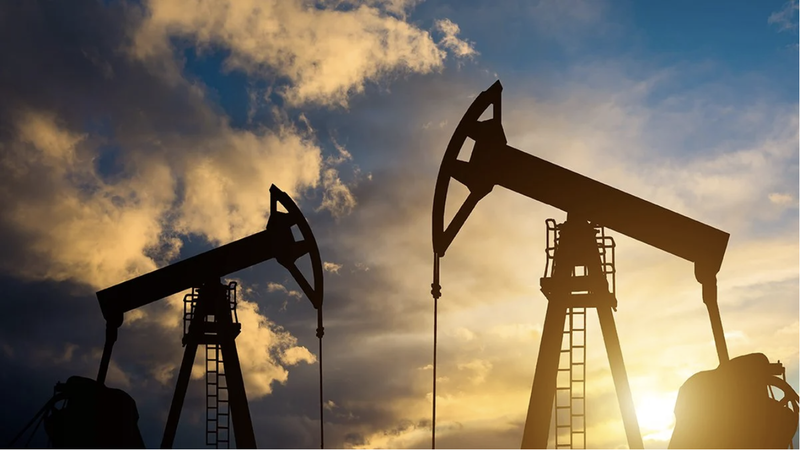
The war has affected almost every part of society. Although the conflict is taking place far from most consumers in Europe and North America, its economic consequences have travelled quickly through global markets. As oil and gas become more expensive, the cost of producing, transporting and selling goods also rises. These costs are then passed on to consumers.
Interest rates
Widely seen as an instrument with which to cool price fluctuations by reducing business spending and limiting borrowing, interest rate regulation is fundamental. However, central banks have faced a difficult problem: raising rates may help control inflation, but it cannot directly solve an energy crisis caused by war.
The European Central Bank (ECB) decided not to change interest rates at the end of April, holding them at 2%. The president of the ECB, Christine Lagarde, justified the decision by arguing that inflationary pressure was largely external and driven by energy prices, while warning that uncertainty had made decision-making exceptionally difficult.
Similarly, on the other side of the English Channel, the Bank of England has held its own interest rates at 3.75% in an attempt to control inflation, which is currently at 3.3%. The Bank has had to balance inflation control with the danger of placing even greater pressure on households already dealing with higher mortgage repayments, rents and bills.
Likewise, the US Federal Reserve held its own interest rates in the range between 3.5% and 3.75%. The international picture is therefore one of caution. Central banks are trying to prevent a temporary energy shock from turning into a longer-term inflation crisis, while avoiding measures that could weaken economic growth too severely.
Interest rate stability is, at least for now, a sign of caution rather than panic, signifying that the central banks central banks do not yet appear to expect inflation to rise in the same way as it did after Russia’s invasion of Ukraine in 2022.
Consumer Price Index
Perhaps the best measure through which to consider price rises, the Consumer Price Index (CPI) gives an overall picture of the progression of prices for the consumer. Nowhere has this growth in prices been felt more than in the US, where prices rose by 0.9% in the month of March, and have risen by 3.3% in the past year. The 0.9% rise in one month was equalled in France, where the annual average is considerably lower because of declines last year, at 1.7%. In both the UK and Italy, the month-on-month figure was 0.6% in March.
This significant growth in prices, likely to be repeated in April’s figures which are not yet available, can be explained by the sharp growth in fuel prices, despite some governments’ attempts to limit the upwards spiral through fuel duty cuts. While some European countries such as Spain and Italy quickly introduced temporary cuts in the taxes applied to fuel, others have simply let the markets take their natural course, bringing about notable increases.
Indeed, the significant increase in fuel costs has been the catalyst for price rises in many sectors. In the US, in the space of a year, fuel costs have risen from an average of €0.70 to €1.01 per litre, an increase of more than 40%. The same story has been repeated across all of Europe, where petrol (gasoline) prices have risen to close to €2.00 in many countries.
In terms of crude oil, the price of Brent Crude rose sharply: from $72.29 per barrel on the 27th of February, the day before the start of the war, to a peak of $118.03 on the 29th of April, representing a considerable 63.27% increase in the space of only two months.
The impact of this growth in crude oil prices goes far beyond the automotive and household utilities sector. Increased fuel prices raise the cost of transporting goods; supermarkets, delivery companies and manufacturers all face higher operating costs. And these costs eventually reach the consumer.
Food, transport and household bills
Food prices have been among the most visible examples of this wider inflation. Farmers and food producers rely heavily on fuel, electricity and fertilisers, all of which have become more expensive. This means that the cost of producing bread, dairy products, meat and fresh produce has increased.
In Italy, according to ISTAT data, food prices are now rising at an annual average of 2.5%, while frequently purchased items are now increasing by 4.3% per year. In the US these figures are even sharper as President Trump’s trade tariffs take effect: an investigation undertaken by NBC reveals that since the beginning of 2025, average orange juice prices have increased by 22%, and ground beef prices by 18%.
The Future
The future for prices cannot accurately be predicted, although some consolation can be taken from the decision taken by the central banks not to increase interest rates. The decision to maintain current rates signals a desire to ride out the storm, and would suggest that in the current conditions, the central banks consider the crisis manageable.
Inflation, while stubbornly high especially in the US and the UK, has not risen in the same way as in 2022. Recent diplomatic signals suggest that both American and Iranian representatives may be seeking a route towards de-escalation, although any possibility of peace agreement remains uncertain.