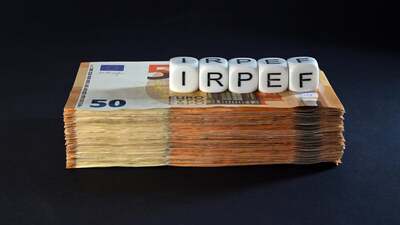
While, in Italy, the proposal for a wealth tax is considered by the courts before it can be put to a popular referendum, the international situation is extremely diverse. France, Spain and Norway all have wealth taxes – either explicitly or de facto – while other countries show signs of considering the measure.
The present situation around the world
Several nations around the world already have a tax specifically targeting the wealthiest with assets above a certain threshold. The most famous case is Norway which has imposed a tax on wealth for over a century, imposing a 1% rate of tax on all wealth above 1.76 million crowns, about € 163,000.
Another example is in France, which has had a wealth tax since 1989, with it being reformed in 2018 under President Macron and his first prime minister Édouard Philippe. Prior to the reform, the ISF, annual solidarity tax on wealth, was applied to assets, not only real estate, with a value in excess of €1,300,000. Currently, owners of real estate properties with a combined value of at least €1,300,000 are liable to pay the additional contribution, and in 2019 it produced 2.1 billion euros for the French state, with 139,149 declarations being made. Although this is modest in relation to France’s total public revenue, it shows that the IFI remains a significant symbolic and fiscal instrument.
A similar measure has been present in Spain’s taxation system since 1977. It is applied on assets above €700,000, with a progressive rate, beginning at 0.2% and reaching 3.5%, with slight differences between Spain’s regions. Indeed, in Spain, the wealth tax legally consists of two separate taxes: a regional net wealth tax, and a national solidarity wealth tax.
Proponents of a wealth tax often point to the ability to reduce income tax for the lowest earners, while targeting the richest with a small percentage tax, with rates generally not exceeding 2%.
Countries considering the introduction of a wealth tax
Other nations, particularly in Western Europe, have demonstrated signs of considering an additional wealth-based tax. In the United Kingdom, members of the governing Labour Party as well as the Green Party – which is now growing steadily in the opinion polls and has frequently arrived at 20% support – actively support a wealth tax. The Greens proposed in their 2024 manifesto a 1% taxation on assets above £10 million, or approximately €11.5 million.
Increases to taxation are finding greater space, more generally, in electoral manifestoes in many of the developed world’s richest countries and finding considerable support from voters. For example, newly-elected mayor of New York, Zohran Mamdani – a socialist who has never hidden his support for an increase to taxes – was favoured by the Big Apple’s voters over his opponent, winning with almost 51% of the votes cast. Thus, in certain areas, even in the USA, bastion of low-taxes, increases can find some support.
Opposition to wealth taxes
Frequent opposition to wealth taxes is based on the deterrent effect these measures can have on encouraging citizens from investing and from growing their capital, thus limiting GDP growth. Opponents argue that these measures may discourage investment, saving and capital accumulation, thus having a considerable impact on growth. Outside the European continent, wealth taxes have often gained little traction, with policymakers usually preferring a lower tax-burden amid concerns that these measures could encourage capital flight or under-declaration of assets.
Indeed, those who oppose such a measure often argue that wealth taxes discourage entrepreneurship and growth, as well as disincentivising international investment in a country which imposes a tax on wealth. In 2019, the Finance commission of the French Senate produced a report, in which the reform of the wealth tax was strongly criticised for the inequalities that it had produced: 18% of the wealthiest households (with assets exceeding €10 million) are exempt, while 20% of those liable for the IFI have an income of less than €60,000.
Thus, the introduction of a wealth tax poses great difficulties and risks seriously harming growth. While seeking to address certain inequalities, it risks creating other inequalities, all while pushing taxpayers abroad. There is also a more practical opposition to the introduction of new taxes, and the reason for which countries have historically tended towards a simplification of the system: the introduction of new measures creates additional costs for the State.
An unpredictable future
The future for wealth taxes seems to remain largely unclear. While many European countries maintain their wealth taxes and do not show signs of wanting to eliminate these measures, others look to this model as a possible way to redress certain inequalities.
In Italy, the debate is therefore unlikely to be settled by foreign examples alone. The experiences of France, Spain and Norway show that wealth taxes can raise revenue and serve redistributive aims, but also that their design matters: thresholds, exemptions, valuation rules and enforcement mechanisms determine whether they are seen as fair or distortive, especially in order to avoid an exodus of capital.