
Nuclear power remains a divisive subject. For decades, rejected bills and lost referendums have stalled large reactor projects in many countries. But that does not mean the sector is standing still — far from it. A new generation of nuclear reactors is growing quietly and aiming to reshape the global energy industry: small modular reactors, or SMRs.
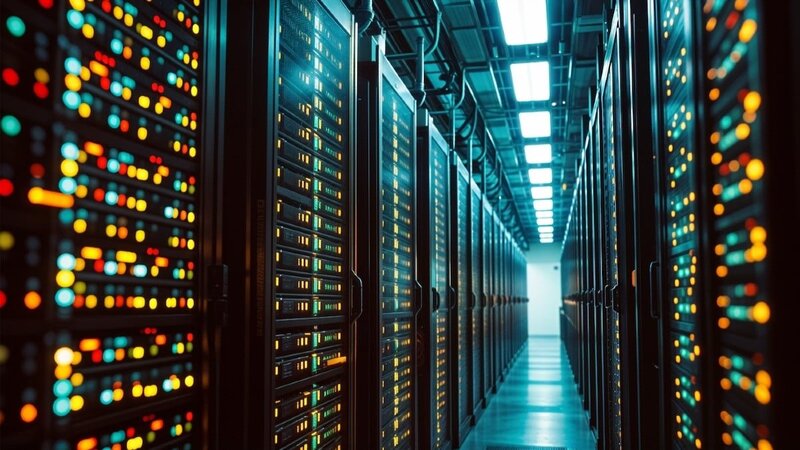
In a world where data centers need ever more electricity to run artificial intelligence, giants like Amazon, Google and Meta are preparing to invest billions in this nuclear technology. Some projects are already under construction in the United States and China.
So what exactly are they, and what are the near-term benefits? Here is what SMRs are, who has already invested, where they could go, and whether there is any opening for them in Italy.
What SMRs are
SMRs are nuclear reactors of up to 300 MWe, built with modular technologies that rely on prefabrication. Unlike traditional reactors, which exceed a thousand megawatts, SMRs operate at far lower output and are designed to be standardized, easily repeatable production units.
The key to understanding them is the word modular. A plant built on this technology does not house a single large reactor but several identical modules. It follows the same logic as a car assembly line: standard components, uniform quality controls, reduced build times and, above all, lower costs.
There are two main categories of SMR today. The first uses a Gen III+ design based on established technologies such as pressurized water reactors. The second uses Gen IV+ designs with alternative coolants such as sodium and molten salts.
How SMRs work
Like any other nuclear reactor, SMRs harness nuclear fission. Heat is generated to boil water, produce steam, and spin a turbine and a generator, producing electricity in a thermoelectric plant. The big difference lies in scale and operational flexibility.
One of the clear advantages of SMRs is the ability to carry out maintenance — refueling and inspections — at the module level. That way, only minor amounts of output are interrupted, rather than shutting down the entire plant. If a single module needs servicing, the others can keep running and generating power without stopping.
What SMRs are for
With data center electricity demand projected to reach 1,300 TWh globally by 2035, SMRs could become essential. It is no coincidence that the four largest U.S. big-tech companies collectively signed for more than 10 GW of new nuclear capacity last year.
Renewables exist and are growing, but they may not be enough. They run intermittently, require large-scale collection, and must be built across vast areas. Nuclear, by contrast, offers stable, dispatchable energy that runs continuously.
These systems can be used both as a single plant and as a cluster of modules, making it possible to combine nuclear with alternative sources, including renewables. They can power steel mills, refineries, remote communities, islands and military bases, for example. But the main focus is AI data centers and other industrial operations where developers may prefer not to connect to the grid at all.
The advantages of SMRs
Several factors could push SMRs toward large-scale adoption. First, given their small size and the high level of technology involved, they are considered safer than traditional reactors. With lower thermal output, residual heat is dissipated more easily, even without external power.
Another major advantage over conventional plants is a shift in the underlying economics. Instead of pursuing economies of scale through the size of a single plant, SMRs pursue them through production volume. Where a large traditional reactor takes 10 to 15 years to build, with all the attendant overruns, SMRs are manufactured in a factory to industrial standards and then transported to the chosen site.
In sustainability terms, SMRs offer strong cost efficiency and are well suited to cogeneration: systems that supply both heat and power to help decarbonize heavy industry. In short, they are small modular reactors that, within a relatively short time, could provide stable energy to power-hungry sectors such as industry and data centers themselves.
Are any SMRs already running?
The whole world is starting to move toward SMR deployment. In Romania, a 462 MWe plant from NuScale Power is in development — the first SMR with a design certified by the U.S. Nuclear Regulatory Commission (NRC).
In the United Kingdom, Rolls-Royce recently cleared Step 3 of the Generic Design Assessment (GDA), with the Wylfa site already selected; construction is expected to begin in 2027. X-energy, meanwhile, is signing partnerships with Amazon and Korea Hydro & Nuclear Power to explore powering AI data centers with nuclear energy.
And Italy? For now, a handful of private alliances have taken shape, such as the one between Maire and Newcleo to develop plants based on a 200 MWe advanced modular reactor. Edison has signed an agreement with EDF and ENEA (Italy’s national agency for new technologies, energy and sustainable economic development) to study the possible use of SMRs to support Italian industry.
The outlook for SMRs
The global SMR market is estimated to reach a valuation of $53.8 billion by 2036, topping $300 billion by 2046, according to research firm IdTechEx.
If that boom materializes, it will rest on three main drivers: exponentially rising energy demand driven by AI, geopolitical pressure for energy autonomy, and climate urgency. While private investment currently comes almost entirely from tech giants, governments are beginning to lend support through public financing and regulatory simplification.
There are still open challenges, though. SMRs remain at the prototype stage, with commercialization expected after 2030. One key issue is regulatory approval, although significant progress has been made recently. Questions also remain around nuclear waste management and the fuel cycle — even if advanced SMR designs appear to promise closed, more sustainable cycles.
Editor’s note
This article was originally published in Italian on money.it by Pasquale Conte on June 21, 2026 as «Cosa sono gli SMR, i piccoli reattori nucleari che accendono il futuro dell’AI?». It has been translated and adapted for an international audience by the Money.it International desk.