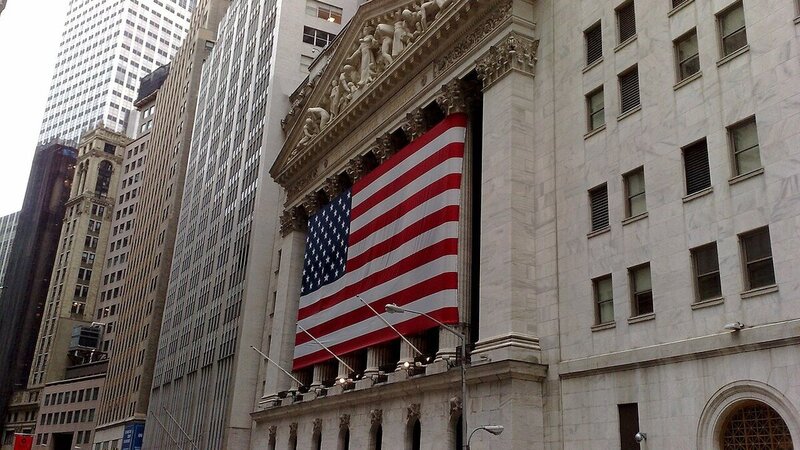
Wall Street enters Thursday searching for a bottom. The S&P 500 closed at 7,636.36 on Wednesday, down 0.48%. It was the index’s third straight losing session.
Behind the slide sit two numbers that rarely move together for long: bond yields and oil. The 10-year Treasury yield touched 4.857% on Wednesday, its highest level since November 2023, after the U.S. Treasury said it would triple its buyback operations of longer-dated government debt. Brent crude settled at $101.21 a barrel, up 3.4% and its priciest close since May, while U.S. benchmark WTI rose 3.3% to $96.05.
“Those two things shouldn’t be able to live together for very long,” said Thomas Martin of Globalt Investments, pointing to equity optimism sitting next to what he called extreme rate pessimism. Matt Maley of Miller Tabak went further, warning that a break above 4.8% on the 10-year “would be particularly concerning” for other asset classes.
The Dow and the small-cap Russell 2000 led Wednesday’s declines, with the Russell 2000 down 1.24%. The CBOE Volatility Index jumped 4.58% to 16.44 as investors paid up for downside protection. Technically, the S&P 500 is testing familiar ground: Wednesday’s close of 7,636.36 sat just above the session’s low near 7,629, a support level traders are now watching, while a recovery above roughly 7,684 — the index’s declining 50-day trend line — would suggest the selling pressure is easing. For more on what a persistent bond selloff can mean for the broader economy, see money.it’s breakdown of which recession indicators are still flashing warnings.
Oil is the other half of the story. Brent crossed $100 a barrel for the first time in roughly two months after U.S. Central Command reportedly struck five Iranian oil tankers near Kharg Island and in the Gulf of Oman. Iran’s Revolutionary Guard retaliated with a missile barrage on Jordan’s Al Azraq air base; Jordan’s military said it intercepted 18 of the 20 missiles fired, with two landing in unpopulated areas.
Asian markets spent Thursday morning digesting both threads at once. Japan’s Nikkei 225 traded roughly 1% lower, capped by a firmer yen near a seven-month high against the dollar ahead of the Bank of Japan’s September 17-18 policy meeting, where a quarter-point rate hike is priced in. Chip and AI-linked names, including Tokyo Electron and Advantest, kept losses in check, echoing the chip-stock rebound that has repeatedly cushioned U.S. futures this year. The European Central Bank is also due to announce a rate decision Thursday, with a quarter-point hike widely priced in ahead of it.
Thursday’s own calendar could decide which force wins. The Bureau of Labor Statistics is scheduled to publish the Producer Price Index for August at 8:30 a.m. Eastern. The agency defines the PPI as a gauge that “measures the average change over time in the selling prices received by domestic producers for their output” — in plain terms, wholesale inflation that often shows up in consumer prices a few months later. Economists expect a 0.4% monthly gain in headline PPI after last month’s flat reading, and a 0.3% rise in the core measure, which excludes food and energy. Annual producer inflation stood at 4.7% in July.
The Fed’s own policy meeting follows next week, adding weight to any inflation surprise today — a dynamic Money.it covered when Fed Chair Kevin Warsh last laid out his read on the rate path.
What to Watch for the Open
- 8:30 a.m. ET: August Producer Price Index and weekly initial jobless claims
- Later Thursday: August existing home sales and the weekly EIA crude oil inventories report
- The 10-year Treasury yield, after Wednesday’s push to 4.857% — a close above 4.8% would keep pressure on stock valuations
- Brent and WTI crude, still reacting to the Gulf shipping strikes
- Next week’s Federal Reserve meeting, now the market’s next major catalyst
A hotter-than-expected PPI reading would likely push yields higher still, adding to Wednesday’s pressure on stocks. A softer number could give equities room to stabilize. But with oil near $101 a barrel and the Fed a week away, Thursday’s calm is unlikely to last long.