
US stock futures steadied on Friday as Wall Street tried to stabilize after a brutal session for Big Tech. Dow Jones Industrial Average futures rose about 0.4% to 52,120, while S&P 500 futures added 0.2% to trade near 7,460. Contracts on the tech-heavy Nasdaq 100 hovered just above the flatline at 28,632, a sign that the damage from Thursday had not fully healed.
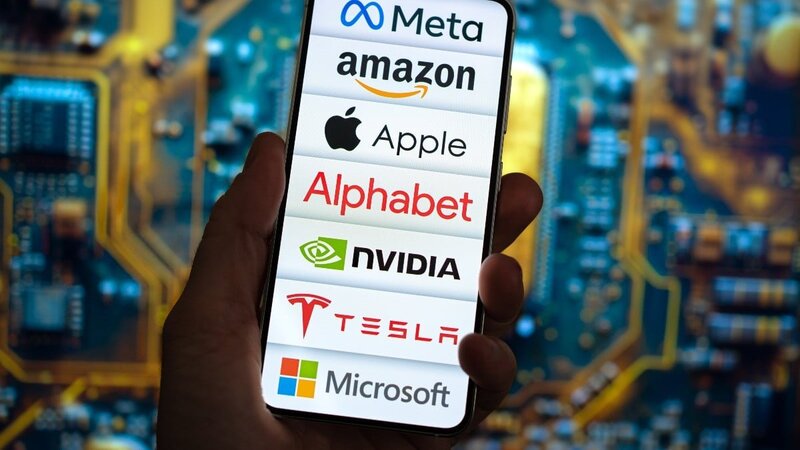
The calm followed one of the worst days for megacap technology in more than a year. The Magnificent Seven — Apple, Microsoft, Alphabet, Amazon, Nvidia, Meta and Tesla — shed nearly $800 billion in combined market value on Thursday, their steepest single-day drop since April 2025. The S&P 500 cash index closed down 1.21% at 7,408.30. The Nasdaq Composite fell 2.15% to 25,137.69, and the Dow lost 506.93 points, or 0.97%.
Why the Magnificent Seven cracked
The trigger was spending, not sales. Results from Alphabet and Tesla reignited fears that the industry’s ballooning artificial-intelligence budgets are running ahead of returns. Both companies flagged higher capital expenditure on AI infrastructure, and investors who had bid the group up to records punished the bill. The sell-off spread across the Pacific overnight, dragging down South Korea’s KOSPI and Japan’s Nikkei 225. Investors looking to cut their exposure to the seven largest names have increasingly turned to funds that strip the group out of the index.
New tariffs take effect overnight
A second headwind arrived from Washington. President Trump’s latest round of global tariffs went into effect overnight, covering an estimated 99.4% of US imports. The new Section 301 duties — designed to better withstand legal challenges — carry rates of 10% to 12.5% on America’s top trading partners. The White House exempted some energy products, a nod to a market already nervous about inflation.
Oil, yields and the fear gauge
Crude cooled after a sharp run-up. International benchmark Brent slipped about 2% to trade below $99 a barrel after briefly touching $100, a level that revives worries about the inflation path just as higher energy costs feed through to the wider economy. Elevated bond yields remain the backdrop, keeping pressure on rate-sensitive growth stocks. The Cboe Volatility Index, Wall Street’s italico“fear gauge,”/italico ticked up to 18.92, still short of levels that signal panic. Gold held near $4,054 an ounce, and Russell 2000 futures pointed 0.2% higher, a hint of rotation toward smaller, more domestic names.
The Fed looms next week
The macro calendar is thin on Friday but heavy next week. The Federal Reserve has held its benchmark rate at 3.50% to 3.75% since late 2025, and the Federal Open Market Committee meets again on July 28-29. In its June statement, the FOMC voted 12-0 to keep rates on hold and warned that inflation “remains elevated relative to the Committee’s 2 percent goal,” adding that it “will deliver price stability” — language markets read as a signal it is in no hurry to cut. Friday’s data highlights are S&P Global’s flash purchasing managers’ indexes for July and new home sales from the Census Bureau — both useful reads on whether tariffs and high borrowing costs are cooling activity. This pre-open setup echoes the tug-of-war between tech and macro headlines that has defined recent sessions.
On the corporate side, American Express, NextEra Energy and Verizon Communications headline Friday’s earnings, offering a cross-section of the consumer, utility and telecom sectors.
What to Watch for the Open
- Megacap tech: whether Alphabet, Tesla and the rest of the Magnificent Seven stabilize or extend Thursday’s slide.
- Tariff fallout: early reaction in import-heavy sectors and any retaliation headlines from major trading partners.
- Oil and yields: Brent’s hold below $100 and the direction of the 10-year Treasury yield.
- Data: S&P Global flash PMIs and new home sales for signs of slowing growth.
- Earnings: guidance from American Express, NextEra Energy and Verizon.
With the Magnificent Seven wobbling and a fresh tariff regime now live, Friday shapes up as a test of whether buyers step back in before the weekend — or whether Wall Street books a second straight weekly loss.